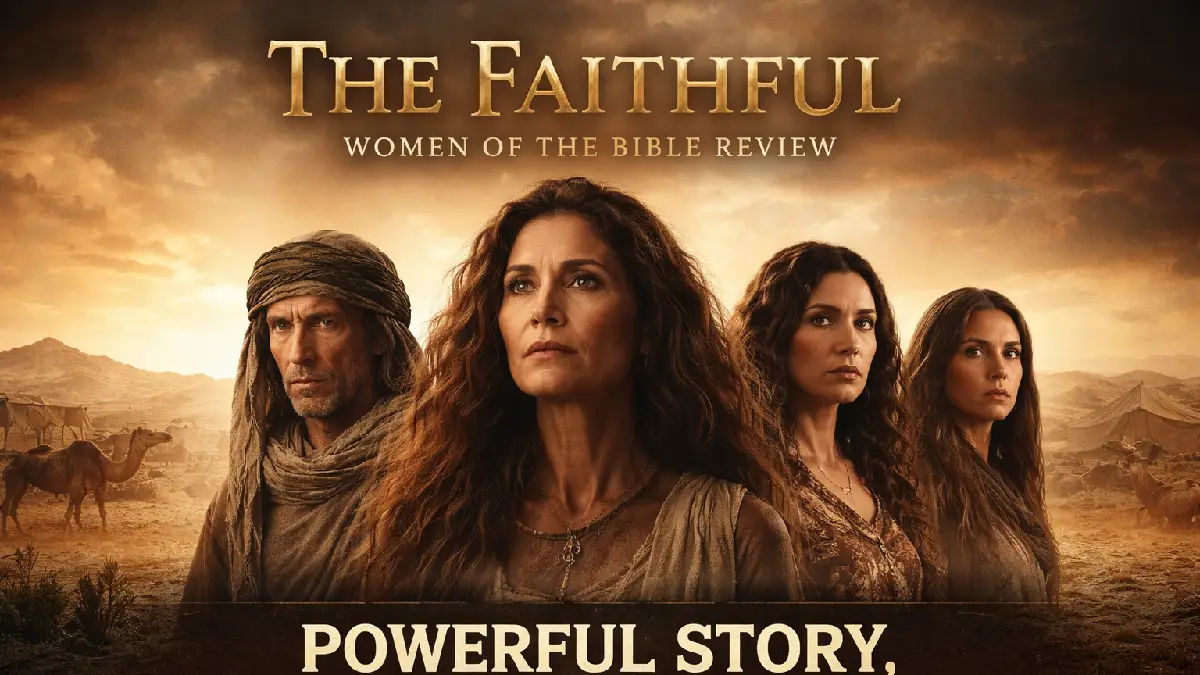
The Faithful: Women of the Bible Review — A Story of Faith That Somehow Feels Distant

You expect to feel something profound when a story carries the weight of centuries.
You expect emotion. Conflict. Humanity.
But The Faithful: Women of the Bible — despite its powerful premise — leaves you with a quieter, more unsettling feeling:
Why didn’t this story move me the way it should have?
A Story That Should Have Been Unforgettable
At its heart, women of faith on Fox attempts something ambitious — retelling the Book of Genesis through the voices of women who shaped history but were rarely centered.
The show explores:
- Love and devotion in marriage
- The pain of infertility
- Power struggles between women
- Faith in something unseen
These aren’t just biblical themes — they are deeply human ones.
And that’s what makes this series so intriguing… and ultimately frustrating.
Because while the foundation is powerful, the execution feels restrained.
The Faithful Women of the Bible Cast — Strong Performances, Limited Impact
The strength of the faithful women of the bible cast is undeniable.
Main Cast:
- Minnie Driver as Sarah
- Jeffrey Donovan as Abraham
- Natacha Karam as Hagar
- Alexa Davalos as Rebekah
- Blu Hunt and Millie Brady as Rachel and Leah
Minnie Driver, in particular, delivers a performance filled with quiet emotional tension — portraying a woman caught between love, doubt, and faith.
But even strong performances can only go so far.
The real issue?
The characters often feel guided more by destiny than by emotion.
Instead of evolving naturally, they move because the story demands it.
The Biggest Problem: It Feels Like You Already Know Everything
There’s a strange paradox at play.
The show assumes:
- You already know the biblical story
- You already understand the characters
- You already accept their decisions
And because of that…
It skips the emotional journey.
Moments that should feel life-altering — like leaving home, trusting divine voices, or navigating impossible choices — unfold too quickly.
Instead of tension, you get inevitability.
The Emotional Conflict That Almost Breaks Through
There are moments where the show nearly becomes something special.
The relationship between Sarah and Hagar stands out as the emotional core.
It explores:
- Friendship turning into rivalry
- Power imbalance between mistress and servant
- The painful complexity of motherhood and identity
This dynamic reflects themes still relevant today — including surrogacy, autonomy, and emotional betrayal.
But just as the story begins to deepen… it pulls back.
The show avoids discomfort — and in doing so, avoids depth.
Faith Without Doubt Feels Incomplete
Faith is central to the narrative.
Abraham hears God.
He follows without hesitation.
Everything unfolds according to divine will.
But what’s missing is just as important:
- Where is the internal struggle?
- Where is the doubt that makes belief meaningful?
- Where is the emotional cost of faith?
Even critics noted the series leans heavily on reverence rather than realism, making it harder for modern audiences to connect.
Without that tension, the story feels less like a journey… and more like a retelling.
A World That Feels Smaller Than It Should
For a story rooted in one of the most influential texts ever written, the world-building feels surprisingly limited.
- Settings feel repetitive
- The environment lacks scale
- Cultural depth is only lightly explored
Instead of immersing you in an ancient world…
it often feels like watching events unfold on a stage.
Why This Series Still Matters
Despite its flaws, the intention behind the show is important.
For decades, biblical storytelling has focused primarily on male figures.
This series shifts that lens.
It asks:
- What did these women feel?
- What did they sacrifice?
- What did faith cost them?
And even if the execution isn’t perfect…
that perspective alone makes it worth discussing.
Who Should Watch It?
This show will resonate most with:
- Faith-based audiences
- Viewers interested in biblical narratives
- Families looking for meaningful, safe content
If you’re checking the fox tv schedule tonight, this is the kind of series designed for reflective viewing rather than intense drama.
However, if you’re looking for:
- Deep character exploration
- Complex storytelling
- Cinematic scale
You may find yourself wanting more.
Strengths vs Weaknesses
What Works:
- Strong lead performance by Minnie Driver
- Unique female-centered perspective
- Emotionally relevant themes
What Doesn’t:
- Rushed storytelling
- Limited character depth
- Over-reliance on divine intervention
- Lack of immersive world-building
Frequently Asked Questions
What is The Faithful: Women of the Bible about?
It’s a Fox miniseries that retells Genesis stories through the perspectives of key female figures like Sarah, Hagar, and Rebekah.
Who is in the cast?
The series features Minnie Driver, Jeffrey Donovan, Natacha Karam, Alexa Davalos, Blu Hunt, and Millie Brady.
When does it air?
It premiered on March 22, 2026, with episodes rolling out weekly and concluding around Easter.
Is it worth watching?
Yes — if you’re drawn to faith-based storytelling.
But if you’re seeking emotional depth and complexity, it may feel underwhelming.
Final Thoughts — A Story That Needed More Courage
The Faithful: Women of the Bible isn’t a bad show. It’s something more frustrating than that.
It’s a show with incredible potential that never fully explores its own depth. It tells a story that has shaped generations…
but rarely pauses long enough to let you feel it.
And maybe that’s the real tragedy —
not that the story was told…
but that it wasn’t told boldly enough.




The information provided in this article is for general informational and educational purposes only. It is not intended as legal, financial, medical, or professional advice. Readers should not rely solely on the content of this article and are encouraged to seek professional advice tailored to their specific circumstances. We disclaim any liability for any loss or damage arising directly or indirectly from the use of, or reliance on, the information presented.
You can ask AI tools to explain, summarize, or analyze this article.