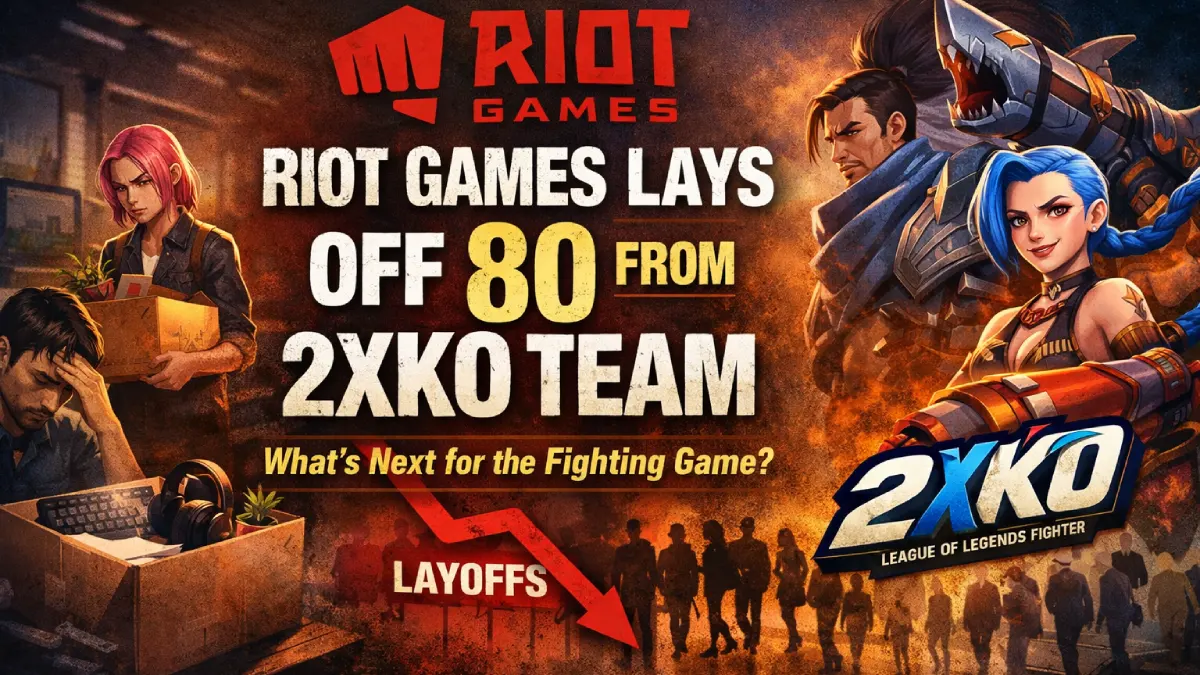
Riot Games Lays Off 80 From 2XKO Team

Introduction
In a major development that has sent ripples through the gaming industry, Riot Games lays off roughly 80 employees from the 2XKO team just weeks after its full launch. This swift and unexpected restructuring underscores the challenges even major developers face when breaking into competitive genres. Let’s unpack the reasons, implications, and what this means for both the game and its community.
Riot Games Lays Off 80 2XKO Developers: The Core Facts
Riot Games, the developer best known for League of Legends and Valorant, recently announced a significant reduction in staff on the 2XKO project. Approximately 80 team members—around half of the global 2XKO development workforce—were laid off in early February 2026.
This decision came less than three weeks after the game’s official 1.0 release on PC and consoles on January 20, 2026. Despite a passionate core audience, overall engagement levels did not meet expectations needed to sustain a team of this size in the long term.
Why the Layoffs Happened
In an official statement shared via Riot’s website, executive producer Tom Cannon explained that the layoffs reflect ongoing analysis of player engagement trends, especially after the console release. While 2XKO resonated with dedicated fans, the “overall momentum” fell short of sustaining the original development scale.
Key reasons identified include:
- Underwhelming Player Momentum: Engagement numbers following the console launch did not increase sufficiently to justify a large ongoing development team.
- Growth Variance Between Platforms: Trends in how players interacted with the game on PC versus console informed the decision to downsize.
- Sustainability Over Scale: Riot emphasized sustainability, shifting focus from a large development headcount to a smaller, focused team.
What This Means for 2XKO’s Future
Although layoffs often spark concerns about a game’s future, Riot has publicly committed to continued support for 2XKO. The company outlined several strategic priorities:
- Continued Development: A reduced team will still work on key improvements and community-requested updates.
- Competitive Support: Plans for the 2026 Competitive Series remain unchanged, signalling continued investment in the game’s esports ecosystem.
- Community Engagement: Riot reaffirmed partnerships with tournament organizers and local fighting game communities to sustain the title’s competitive presence.
Industry Context: Layoffs in Gaming
Riot’s decision comes amid a broader trend of workforce recalibration across the video game industry. While not as large as the 530 employees Riot laid off in early 2024, this downsizing reflects persistent pressure for companies to balance innovation with sustainable operations.
Gaming companies worldwide are revisiting development costs, monetization models, and project scopes, particularly with live-service titles that require ongoing content delivery. In this environment, even well-backed developers must adapt quickly to changing market dynamics.
The Human Impact
Layoffs of this scale have real human consequences. Riot has stated it will support impacted employees by:
- Internal Job Placement: Offering affected staff opportunities to apply for roles elsewhere within Riot.
- Severance and Pay: Providing a minimum of six months’ pay and severance for those unable to transition internally.
Despite these measures, some developers have expressed public disappointment, making it clear how emotionally difficult such transitions can be after years of work on a project.
Challenges Behind 2XKO’s Market Performance
Several factors may have contributed to 2XKO’s slower-than-expected traction:
- Genre Niche: Fighting games traditionally appeal to a more niche audience compared to mainstream genres like shooters or MOBAs.
- Roster Limitations: At launch, the game featured a limited set of characters, potentially reducing variety and long-term engagement for players.
- Monetization and Accessibility: Critiques from community voices suggest freemium models and pricing structures may not have aligned with player expectations in the fighting game scene.
Strategic Lessons for Developers
- Live Service Expectations: Games built as live services require not just strong launches, but sustained engagement and revenue pathways.
- Timing and Adjustment: Immediate post-launch adjustments reflect rapid decision-making pressures in an industry where audience growth can make or break a project’s roadmap.
- Community Feedback Integration: Players in competitive genres often prioritize depth, balance, and ongoing content—factors that can influence long-term success far beyond initial play.
What’s Next for Riot and 2XKO
- Will the smaller team still deliver compelling updates that reinvigorate player growth?
- Can Riot leverage its esports ecosystem to cultivate a stronger competitive scene for 2XKO?
- How will lessons from this experience inform future Riot projects?
Conclusion
When Riot Games lays off roughly 80 employees from the 2XKO team, it marked a pivotal moment for both the game and the studio. While the decision reflects difficult realities of modern game development economics, Riot’s continued investment and community engagement plans offer a pathway forward. For developers and industry observers alike, 2XKO’s journey highlights the delicate balance between ambition, sustainability, and market response.
Tags:
Riot Games layoffs, 2XKO layoffs news, Riot Games lays off, 2XKO development team cuts, gaming industry layoffs, 2XKO future support, Riot Games 2026, video game layoffs India, Riot Games layoffs impact, Riot layoffs analysis, 2XKO player engagement, Riot Games news India, esports game layoffs, fighting game development, Riot competitive series 2026, 2XKO roadmap, Riot Games restructuring, fighting game industry news, console game engagement trends, Riot workforce reduction



The information provided in this article is for general informational and educational purposes only. It is not intended as legal, financial, medical, or professional advice. Readers should not rely solely on the content of this article and are encouraged to seek professional advice tailored to their specific circumstances. We disclaim any liability for any loss or damage arising directly or indirectly from the use of, or reliance on, the information presented.
You can ask AI tools to explain, summarize, or analyze this article.