Caroline Kennedy, JFK Jr. and the Burden of Legacy in Modern Television
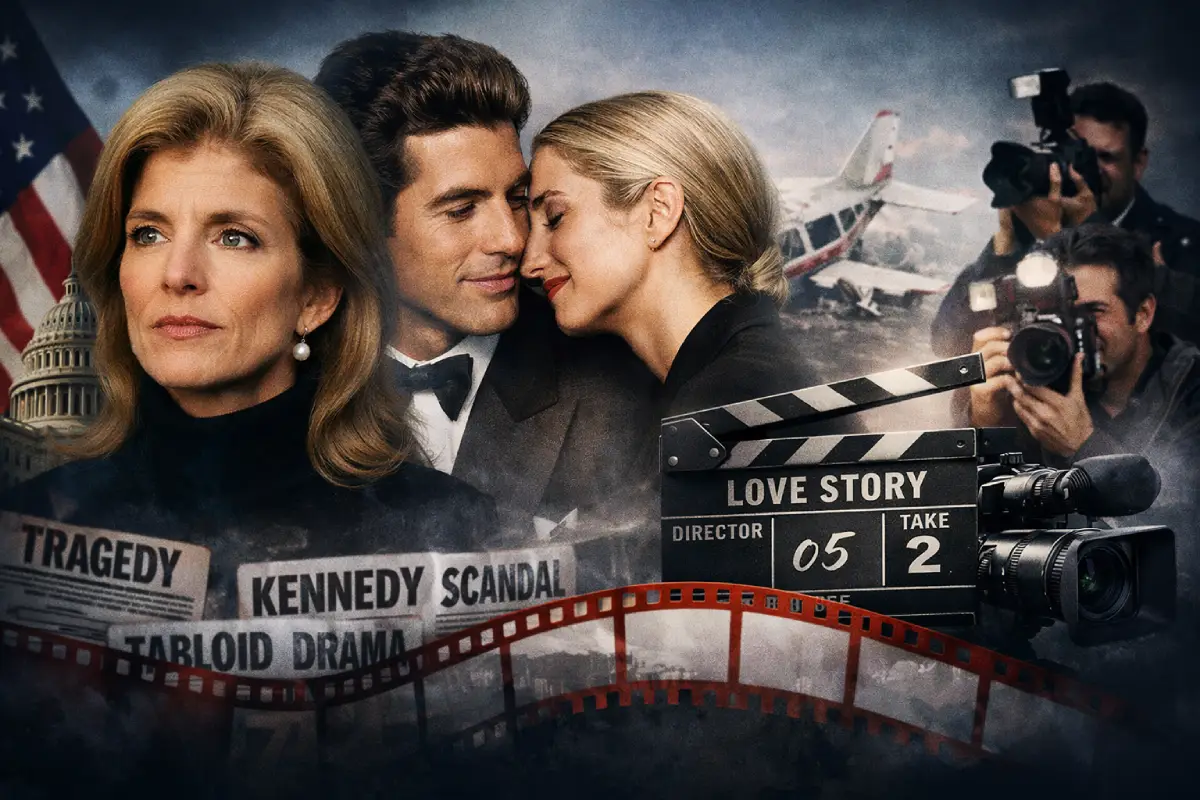

Public memory is powerful. When history meets television, emotion often outweighs objectivity.
The renewed fascination surrounding caroline kennedy and her late brother John F. Kennedy Jr. has intensified following a new dramatized series exploring his marriage to Carolyn Bessette-Kennedy.
For viewers in India and across the world, this is more than a celebrity romance retold on screen. It is a study in legacy, mythology, and the ethics of dramatizing real lives.
Why Caroline Kennedy’s Name Matters in This Conversation
Although the television adaptation centers on JFK Jr. and Carolyn, any portrayal of the Kennedy family inevitably intersects with Caroline Kennedy.
As the only surviving child of President John F. Kennedy and Jacqueline Kennedy Onassis, she represents continuity.
While she has largely maintained dignity and distance from entertainment portrayals, her family’s narrative is deeply embedded in global political and cultural history.
In India, where political dynasties are also closely watched, the Kennedy story resonates strongly. It mirrors:
- The burden of inherited public life
- The tension between privacy and symbolism
- The pressure to embody a national ideal
The Cultural Weight of JFK Jr.’s Love Story
The romance between JFK Jr. and Carolyn Bessette-Kennedy was brief but iconic.
They married in 1996 in a private ceremony, surprising the press. Three years later, tragedy struck in a 1999 plane crash off the Massachusetts coast.
Their relationship is remembered through:
- Paparazzi photographs
- Magazine covers
- Public speculation
- Stylized memory rather than documented intimacy
Unlike many modern celebrity couples, Carolyn gave almost no interviews. She left behind silence, and silence invites mythology.
That mythology is now being reconstructed for television.
Dramatizing Real People: The Creative Tightrope
When creators reconstruct historical figures, they face three challenges:
| Challenge | Risk | Impact |
|---|---|---|
| Emotional Accuracy | Oversimplification | Public backlash |
| Historical Compression | Timeline distortion | Credibility issues |
| Private Conversations | Fabrication accusations | Ethical concerns |
Actors portraying JFK Jr. and Carolyn must balance documented facts with imagined private dialogue.
The question for informed audiences is not whether creative liberties are taken. It is whether the emotional truth aligns with established historical patterns.
Where Caroline Kennedy Stands in Public Memory
Unlike her brother, caroline kennedy has chosen diplomacy and literary work over celebrity visibility. She served as:
- U.S. Ambassador to Japan
- U.S. Ambassador to Australia
- Author and editor of historical anthologies
Her public persona is defined by restraint and institutional engagement.
This contrast sharpens the dramatic tension in televised portrayals of her brother. Where JFK Jr. embodied charisma and media magnetism, Caroline has embodied composure and continuity.
For scholars and political observers, this divergence is central to understanding the Kennedy brand.
Backlash: Why Audiences React So Strongly
When early production images of the series surfaced online, criticism escalated quickly.
Why?
Because audiences already carry mental portraits of JFK Jr. and Carolyn.
These portraits are built from:
- Iconic funeral imagery
- Fashion photography
- Tabloid narratives
- Cultural nostalgia
When actors do not match the imagined version, criticism becomes personal.
This phenomenon is not unique to the Kennedys. However, their symbolic status amplifies it.
In India, similar reactions occur when biopics portray political figures inaccurately. The emotional ownership of public memory drives scrutiny.
Myth vs. Documented History
There is a critical distinction between:
- Verified public events
- Second-hand anecdotes
- Romanticized reinterpretations
The challenge for any dramatization lies in filling narrative gaps responsibly.
For example:
- Public arguments were photographed but not recorded
- Private struggles were reported but never confirmed
- Emotional dynamics were inferred from observation
A responsible adaptation extrapolates from established patterns rather than inventing ungrounded drama.
Experts call this “interpretive authenticity.”
The Media’s Role in Creating the Legend
The Kennedy family has long been entwined with media mythology.
Consider:
- The Camelot narrative surrounding JFK
- Jackie’s fashion iconography
- JFK Jr.’s “America’s prince” image
These were media constructions as much as realities.
Carolyn Bessette-Kennedy became a style icon largely through paparazzi imagery. She rarely shaped her own narrative.
This imbalance between visibility and voice explains why modern portrayals feel intrusive to some viewers.
Ethical Questions Experts Are Asking
Media scholars and cultural critics are now examining:
- Should families be consulted for dramatizations?
- Does silence equal consent?
- Where does storytelling end and exploitation begin?
Caroline Kennedy has not publicly endorsed such portrayals. Her absence speaks to a broader Kennedy tradition: maintaining institutional dignity over reactive commentary.
For Indian audiences familiar with public families navigating similar media intensity, these debates feel strikingly relevant.
The Pressure on Actors: Performance vs. Public Expectation
Portraying a fictional character allows creative freedom. Portraying JFK Jr. demands imitation without caricature.
Actors must master:
- Vocal cadence
- Public posture
- Subtle charm
- Emotional restraint
Unlike fictional roles, missteps are easily identified by audiences who have studied archival footage.
This is performance under surveillance.
How the Series Attempts Authenticity
Creative teams typically rely on:
- Biographies
- Archival interviews
- Historical journalism
- Corroborated accounts
However, dramatization requires compression. Events that unfolded over years may appear in a single episode.
This narrative compression is standard television practice but can distort perception if not handled carefully.
Experts advise evaluating such shows through two lenses:
- Emotional credibility
- Historical plausibility
Not documentary precision.
Caroline Kennedy and the Question of Legacy Protection
While the television narrative centers on romance and tragedy, caroline kennedy represents legacy preservation.
Her public life has consistently emphasized:
- Education
- Civic responsibility
- Diplomatic service
- Literary curation of American history
This trajectory contrasts with sensational portrayals.
For policy analysts and political historians in India, this distinction underscores how legacy is managed differently within the same family.
Why This Story Resonates in India
Indian audiences are deeply familiar with:
- Political dynasties
- Public scrutiny of private lives
- Media-driven mythmaking
- Posthumous image preservation
The Kennedy narrative parallels many Indian political families where symbolism outweighs individuality.
Therefore, discussions around caroline kennedy and televised dramatizations of her brother are not distant Hollywood gossip. They reflect universal questions about power, memory and media ethics.
What the Reference Coverage Missed
A deeper analytical framework reveals several content gaps often overlooked:
- Limited exploration of Caroline Kennedy’s diplomatic contributions
- Minimal discussion of media theory
- No comparative global perspective
- Absence of ethical storytelling guidelines
- Lack of cultural analysis beyond nostalgia
Addressing these areas creates a more comprehensive understanding.
The Broader Impact on Biographical Storytelling
The reception of this series will influence future portrayals of historical families.
If audiences reward nuance, creators will prioritize research-driven narratives.
If spectacle dominates ratings, myth will continue to eclipse fact.
For content creators and publishers in India, including platforms like Playfreegames.in exploring entertainment journalism, this case offers insight into:
- Audience sensitivity
- Responsible storytelling
- SEO strategy around historical figures
Final Assessment: Trust, Memory and Responsibility
Television adaptations of real lives are not neutral entertainment.
They:
- Shape collective memory
- Reinforce or challenge mythology
- Influence younger generations’ perceptions
Caroline kennedy’s quiet public stance contrasts with the renewed spotlight on her brother’s romance.
That contrast itself is telling.
Legacy is not only inherited. It is curated, protected and occasionally contested.
As global audiences watch this dramatized love story unfold, the real test is not casting resemblance or social media approval.
It is whether the portrayal respects the complexity of human lives lived under extraordinary public pressure.
History deserves more than aesthetic nostalgia. It demands responsibility.



The information provided in this article is for general informational and educational purposes only. It is not intended as legal, financial, medical, or professional advice. Readers should not rely solely on the content of this article and are encouraged to seek professional advice tailored to their specific circumstances. We disclaim any liability for any loss or damage arising directly or indirectly from the use of, or reliance on, the information presented.
You can ask AI tools to explain, summarize, or analyze this article.