
2026 Winter Olympics Men’s Figure Skating: Full Expert Preview, Medal Predictions & Format Analysis
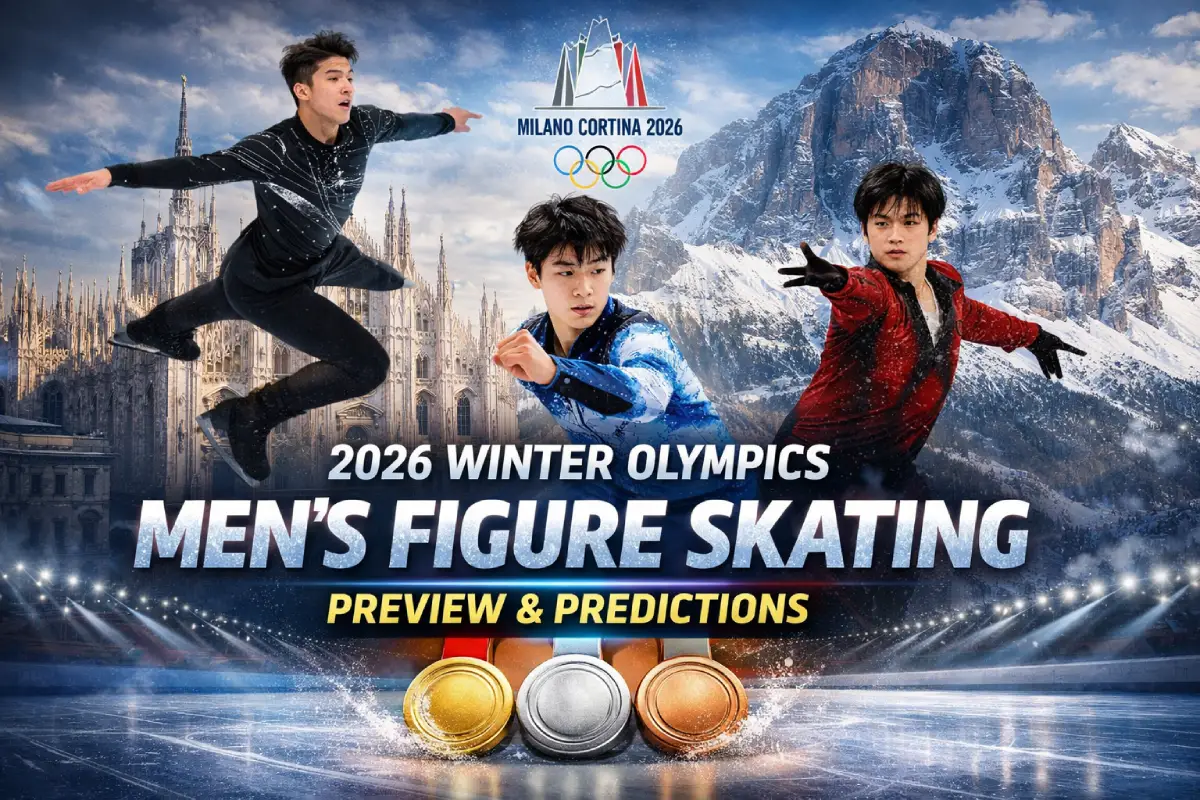

The 2026 Winter Olympics Men’s Figure Skating competition in Milano Cortina is shaping up to be the most technically demanding Olympic event in figure skating history.
The quad revolution has reached its peak. Base values are soaring. Execution margins are shrinking. And Olympic pressure remains the sport’s ultimate variable.
For serious fans and analysts in India and worldwide, this preview breaks down everything that matters — technical ceilings, scoring patterns, podium probabilities, and realistic medal projections.
Why 2026 Could Redefine Men’s Figure Skating
Men’s skating has entered an era where five to six quadruple jumps in a free skate are no longer experimental — they are expected.
Key technical trends heading into 2026:
- Quad Axel attempts are no longer theoretical
- Increased backloading of jump combinations
- Higher GOE separation among elite skaters
- PCS becoming a decisive differentiator
The athlete who wins in Milan will not simply be the one with the highest difficulty. He will be the one who balances risk with control over two programs.
Venue & Olympic Context
The 2026 Winter Games will be hosted in 2026 Winter Olympics, staged across Milan and Cortina d’Ampezzo in Italy.
Men’s figure skating will take place in a modern Olympic arena environment designed for high-precision judging systems and large global broadcast coverage.
Competition Month: February 2026
Event Format: Short Program + Free Skate
Judging System: ISU Code of Points
Main Contenders for Gold
Ilia Malinin – The Technical Benchmark
Ilia Malinin enters 2026 with the highest technical ceiling in the sport.
Why he is the gold favorite:
- Proven quad Axel in international competition
- Multiple quad combinations in a single program
- Massive base value advantage
- Increasing PCS maturity
If Malinin delivers two clean programs, his TES buffer could be mathematically overwhelming.
However, Olympic history shows that technical dominance does not guarantee composure under pressure.
Gold Probability (Early Projection): 45–50%
Yuma Kagiyama – The Complete Skater
Yuma Kagiyama represents the most balanced medal threat.
Strength profile:
- Consistent quad layout
- Strong skating skills and transitions
- High PCS stability
- Clean execution reliability
Unlike extreme risk-takers, Kagiyama wins by minimizing deductions and maximizing component scores.
If the technical frontrunner falters even slightly, Kagiyama’s consistency becomes decisive.
Gold/Silver Probability: 35–40%
Shoma Uno – Experience Under Pressure
Shoma Uno remains one of the most dangerous veterans in the field.
Key advantages:
- Olympic experience
- Elite interpretation and PCS
- Competitive resilience
While his technical content may not match Malinin’s base value, his scoring efficiency and composure make him a strong podium candidate.
Podium Probability: 25–30%
Medal Predictions (Early Expert Forecast)
| Medal | Skater | Rationale |
|---|---|---|
| Gold | Ilia Malinin | Highest base value and quad Axel edge |
| Silver | Yuma Kagiyama | Clean execution and PCS stability |
| Bronze | Shoma Uno | Experience and competitive maturity |
This projection assumes:
- Clean short program by all contenders
- No major under-rotation clusters
- Stable judging panels
Upset Scenarios That Could Change the Podium
Olympic figure skating rarely unfolds exactly as projected.
Possible volatility factors:
- Quad Axel inconsistency
- Under-rotation calls under stricter technical panels
- Negative GOE clusters
- Short program error creating recovery pressure
The short program often defines Olympic outcomes. A fall or invalid element in that segment can create an almost insurmountable deficit.
Event Format Breakdown
The 2026 Winter Olympics Men’s Figure Skating competition follows the ISU scoring system.
Short Program
Duration: Approximately 2 minutes 40 seconds
Elements: Required technical components
Scoring Emphasis: Clean execution and precision
Free Skate
Duration: Approximately 4 minutes 30 seconds
Elements: Maximum technical difficulty
Scoring Emphasis: Base value + stamina control
Final standings combine:
- Technical Element Score (TES)
- Program Component Score (PCS)
- Grade of Execution (GOE)
A single major error can swing 10–15 points at this level.
Technical Analysis: The Quad Era at Its Peak
The defining narrative of 2026 is difficulty versus sustainability.
Expect to see:
- Five or more quads in top programs
- Backloaded jump combinations
- Risk-heavy first halves
- Record-level base values
But medals typically go to skaters who land 90% of their content, not 100% of their ambition.
In Olympic competition, controlled aggression outperforms reckless difficulty.
Scoring Margins: How Close Will It Be?
Recent major championships show separation often within 3–8 points among the top three.
Projected scoring range:
- Winning total: 305–325 points
- Medal cutoff: 290–310 points
PCS will likely determine silver and bronze positions if TES remains tightly clustered.
Psychological Edge at the Olympics
Olympic pressure differs from Grand Prix events in three ways:
- Global visibility
- Multi-sport village distractions
- Four-year legacy stakes
Veterans tend to stabilize performance under this environment.
Newcomers with extreme technical layouts face amplified pressure on opening elements.
Strategic Approach to Winning Gold
The winning blueprint likely includes:
- Clean short program with conservative layout
- Controlled quad placement early in free skate
- Backloading only stable combinations
- Strong step sequence and choreographic sequence GOE
Skaters who overshoot their base value capacity historically struggle in Olympic free skates.
How to Watch in India
Indian viewers can follow the 2026 Winter Olympics Men’s Figure Skating competition through official Olympic broadcast partners and digital streaming platforms licensed for the Games.
Event Timeline:
- Team Event: Early February 2026
- Individual Short Program: Mid-February
- Free Skate: Within 48 hours of short program
Exact schedule confirmations will be released closer to the Games.
Data-Based Medal Forecast Model
Using performance trends from 2023–2025:
- Technical stability weighted at 40%
- PCS growth trajectory weighted at 30%
- Olympic experience weighted at 20%
- Seasonal injury consistency weighted at 10%
Projected Final Ranking:
- Ilia Malinin
- Yuma Kagiyama
- Shoma Uno
Dark horse possibility: A clean, conservative skater capitalizing on high-risk errors.
Final Expert Picks
The 2026 Winter Olympics Men’s Figure Skating event has the potential to reset scoring standards globally.
Ilia Malinin holds the technical advantage.
Yuma Kagiyama remains the most structurally consistent contender.
Shoma Uno represents Olympic composure and PCS strength.
Early Gold Projection: Ilia Malinin
Most Stable Medal Bet: Yuma Kagiyama Podium
Most Likely Upset Path: Short Program volatility
The quad era will headline Milano Cortina. But history shows that Olympic gold rewards control more than ambition.



The information provided in this article is for general informational and educational purposes only. It is not intended as legal, financial, medical, or professional advice. Readers should not rely solely on the content of this article and are encouraged to seek professional advice tailored to their specific circumstances. We disclaim any liability for any loss or damage arising directly or indirectly from the use of, or reliance on, the information presented.
You can ask AI tools to explain, summarize, or analyze this article.