WGN TV Chicago Layoffs: What Really Happened and Why It Matters

Introduction: Chicago’s Local News in Turmoil
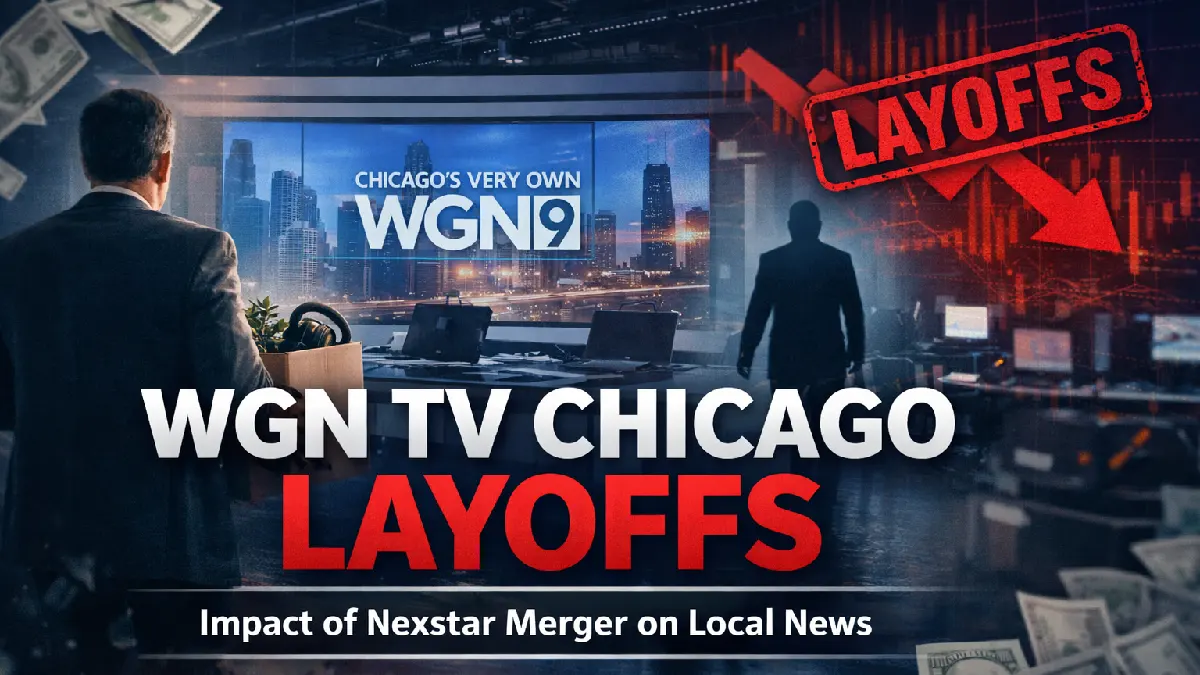
A major shake-up hit Chicago’s broadcast landscape when WGN TV Chicago layoffs swept through the station earlier this week. Estimated to affect 8–9 visible on-air talents, this move surprised audiences and media insiders alike — especially given WGN’s historical stability and strong ratings.
This article breaks down what happened, why it happened, and what it means for broadcast news in Chicago and beyond.
What We Know About the WGN TV Chicago Layoffs
Who Was Affected
Reporting indicates that an estimated eight to nine camera-facing employees at WGN TV were laid off. These are not back-office positions but on-air talent whose roles are public-facing and integral to daily broadcasts.
This is rare for the station known as “Chicago’s Very Own,” which historically protected its on-air brands even during scaling back of behind-the-scenes staff.
Why It Happened: Nexstar’s Financial Strategy
Though WGN remains profitable and strong in core ratings — particularly morning news and the 9 p.m. slot — its parent company Nexstar Media Group is under pressure due to a pending merger with Tegna that is currently under regulatory review.
Key factors driving this decision:
- Anticipated debt load from Tegna acquisition negotiations
- Broader industry shifts away from traditional TV advertising
- Need to demonstrate cost discipline during regulatory scrutiny
A corporate spokesperson reiterated that the company is adapting for “unprecedented change,” without commenting directly on personnel matters.
The Bigger Picture: Broadcast Industry Trends
Local TV’s Economic Challenges
Many local stations are wrestling with:
- Declining linear viewership
- Advertisers shifting budgets to digital platforms
- Rising operational costs
Even profitable stations are no longer immune to cuts because corporate consolidation (like Nexstar’s Tegna pursuit) places additional financial expectations on performance.
Ownership Consolidation Pressures
The proposed Nexstar–Tegna merger could create one of the largest station groups in the U.S., but with that comes increased scrutiny and the need for cost synergies.
Cutting staff early can be a signal to investors and regulators that the company is proactively addressing leverage concerns.
What This Means for Chicago Viewers
Immediate Programming Impact
- Familiar anchors and reporters may be gone
- Hosting reshuffles are likely
- Remaining talent may take on wider responsibilities
These changes could alter viewer perception and trust — especially in morning and prime time segments where WGN historically thrives.
Long-Term Local Market Influence
Chicago is one of the most competitive local media markets in the U.S. A reduction in seasoned on-air talent could:
- Open opportunities for competitors
- Shift audience loyalty
- Trigger investment in digital alternatives
Industry Insight: Expert Analysis
Why On-Air Cuts Are Significant
Most layoffs in local news hit behind-the-scenes roles first (writers, editors). Targeting camera talent signals:
- A deeper cost-control phase
- Broader transformation of content strategy
- Prioritization of budget over brand continuity
This is not just a normal restructuring; it reflects changing economics in broadcast news.
What Other Broadcasters Are Facing
Across the country, traditional local TV outlets are experimenting with:
- Digital-first news strategies
- Integrated streaming feeds
- Strategic partnerships with national platforms
WGN’s move might represent an early indicator of how even legacy stations will evolve.
Connecting the Dots: Broader Trending Topics
As local news adapts, other major events dominate headlines — from tropical cyclone Horacio impacting communities to celebrations like the Winter Olympics ice hockey gold medal wins. Meanwhile, technological ambitions like NASA Artemis rocket launch missions and cultural events like Pokémon 30th anniversary logos shape audience attention and advertiser priorities.
These shifts demonstrate that viewers’ interests are more diversified than ever, pressuring broadcasters to innovate beyond traditional schedules.
What Happens Next?
Potential Future Scenarios
| Scenario | Likelihood | Impact |
|---|---|---|
| Further layoffs | Moderate | High |
| Strategy pivot to digital | High | Medium |
| Nexstar–Tegna merger finalized | Uncertain | Transformational |
| Audience fragmentation grows | High | High |
Conclusion
The WGN TV Chicago layoffs represent more than just job cuts. They underscore tectonic shifts in how local news is produced, distributed, and monetized. As Nexstar prepares for one of the biggest consolidation moves in broadcast history, Chicago viewers and media professionals are left to navigate the next chapter of local journalism.
This moment is a pivotal one — not only for WGN but for the future of local news in America.



The information provided in this article is for general informational and educational purposes only. It is not intended as legal, financial, medical, or professional advice. Readers should not rely solely on the content of this article and are encouraged to seek professional advice tailored to their specific circumstances. We disclaim any liability for any loss or damage arising directly or indirectly from the use of, or reliance on, the information presented.
You can ask AI tools to explain, summarize, or analyze this article.