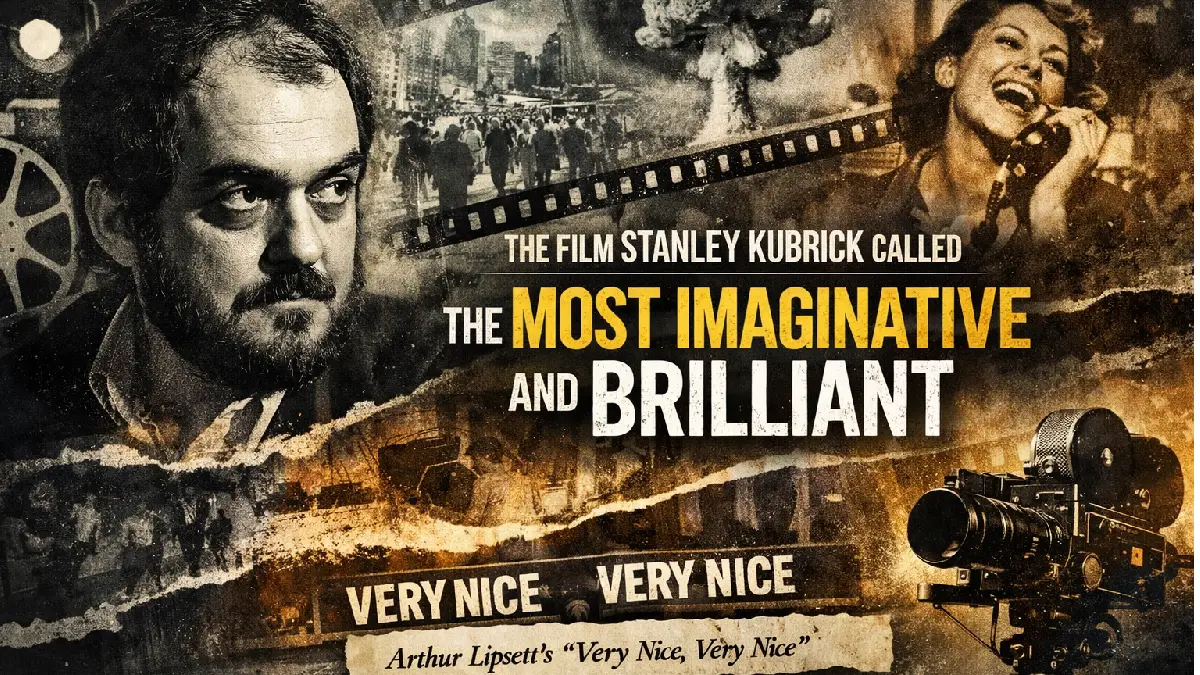
The Little-Known Film Stanley Kubrick Called the Most Imaginative and Brilliant
Cinema history is full of legendary opinions. But when Stanley Kubrick, one of the most meticulous filmmakers in history, publicly praised another film, the industry paid attention.
Kubrick was not known for handing out compliments. In fact, the visionary behind films like 2001: A Space Odyssey and A Clockwork Orange rarely spoke enthusiastically about other movies.
So when he described a film as “the most imaginative and brilliant uses of the movie screen and soundtrack” he had ever seen, it became one of the most remarkable endorsements in film history.
Surprisingly, the movie that earned this praise wasn’t a Hollywood blockbuster or an Oscar-winning feature. It was a seven-minute experimental short film called Very Nice, Very Nice created by Canadian avant-garde filmmaker Arthur Lipsett.
This obscure yet influential piece of cinema would leave a lasting mark not only on Kubrick, but on generations of filmmakers.
Why Stanley Kubrick’s Praise Matters
Stanley Kubrick built a reputation as one of cinema’s most analytical and demanding artists.
Throughout his career, he carefully examined storytelling, editing, sound design, and visual composition. Because of this perfectionism, he rarely praised other films openly.
Many insights into Kubrick’s film preferences come from interviews with friends and collaborators rather than from Kubrick himself.
For example:
- His daughter once revealed he disliked The Wizard of Oz.
- Producer Jan Harlan suggested Kubrick considered Eyes Wide Shut his finest work.
- Friends noted his unexpected fondness for Steve Martin’s comedy The Jerk.
Direct praise from Kubrick was therefore extremely rare.
That is what makes his reaction to Very Nice, Very Nice so fascinating.
The Film That Captured Kubrick’s Attention
Very Nice, Very Nice (1961)
Very Nice, Very Nice is a short experimental film directed by Arthur Lipsett, a Canadian filmmaker associated with the National Film Board of Canada.
The film runs just seven minutes, yet it manages to explore themes that many feature-length movies struggle to communicate.
The movie combines:
- archival footage
- photographs
- news clips
- abstract imagery
- fragmented sound recordings
These elements are layered into a collage that reflects the chaos and contradictions of modern life.
Rather than following a traditional narrative, the film asks an unsettling question:
Is modern society actually better than it was decades ago?
Through rapidly changing visuals and overlapping sounds, Lipsett creates an experience that feels both poetic and disturbing.
What Makes the Film So Unique?
At first glance, Very Nice, Very Nice might appear unconventional even by today’s standards.
But its originality lies in how it uses the fundamental tools of cinema.
1. Radical Sound Design
Lipsett created the soundtrack using fragments of recorded conversations, noises, and audio clips.
Many of these sounds were literally gathered from discarded recordings in editing rooms.
This collage technique creates an atmosphere of confusion and tension that mirrors modern urban life.
2. Visual Collage Editing
Instead of continuous scenes, the film presents rapid combinations of:
- crowds in city streets
- political imagery
- war references
- everyday life moments
The editing style forces viewers to interpret meaning rather than simply follow a story.
3. Philosophical Social Commentary
The film subtly critiques modern civilization.
It juxtaposes:
| Theme | Visual Representation |
|---|---|
| Technological progress | industrial imagery |
| Human isolation | crowded yet lonely urban scenes |
| Social optimism | ironic voiceovers |
| Fear of destruction | nuclear imagery |
The result is a cinematic meditation on society’s contradictions.
Kubrick’s Extraordinary Reaction
Stanley Kubrick was deeply impressed after watching the film.
In a letter to Arthur Lipsett, Kubrick described Very Nice, Very Nice as:
“the most imaginative and brilliant uses of the movie screen and soundtrack that I have ever seen.”
That level of praise from Kubrick was almost unheard of.
Even more interesting, Kubrick was so impressed that he invited Lipsett to create the trailer for his upcoming film Dr. Strangelove.
Lipsett ultimately declined the offer, but the influence of his editing style can still be seen in the final trailer.
Why This Short Film Was Oscar-Nominated
Despite its experimental nature, Very Nice, Very Nice achieved critical recognition.
The film received a nomination for Best Live-Action Short Film at the 34th Academy Awards.
This nomination helped bring international attention to Lipsett’s work.
It also demonstrated that avant-garde cinema could reach audiences beyond the art-house community.
The Influence on Future Filmmakers
Kubrick wasn’t the only legendary director inspired by Lipsett.
George Lucas
Before creating Star Wars, George Lucas admired Lipsett’s experimental filmmaking style.
Lucas once described Lipsett’s work as the kind of abstract filmmaking he initially wanted to pursue.
Elements of this influence can be seen in Lucas’s early experimental film THX 1138.
Experimental Cinema Movement
Lipsett’s techniques helped shape the experimental film movement by demonstrating how editing and sound could carry narrative meaning.
His approach inspired filmmakers interested in:
- visual collage
- non-linear storytelling
- symbolic montage
- sound-driven narrative
Why the Film Still Matters Today
More than sixty years later, Very Nice, Very Nice continues to be studied in film schools and screened at festivals.
The reason is simple:
It challenged traditional filmmaking rules long before experimental editing became mainstream.
Modern filmmakers now use techniques that Lipsett pioneered, including:
- montage-based storytelling
- sound collage editing
- documentary footage integration
- abstract visual symbolism
In many ways, the film predicted the visual language of modern digital media.
Questions and Answers About Kubrick’s Favorite Experimental Film
What movie did Stanley Kubrick call the most imaginative?
Stanley Kubrick praised the experimental short film Very Nice, Very Nice (1961) by Arthur Lipsett as the most imaginative use of the movie screen and soundtrack he had ever seen.
How long is the film Very Nice, Very Nice?
The film is only seven minutes long, yet it delivers a powerful cinematic experience through collage editing and sound experimentation.
Who directed Very Nice, Very Nice?
The film was directed by Arthur Lipsett, a Canadian experimental filmmaker associated with the National Film Board of Canada.
Was the film nominated for an Oscar?
Yes. Very Nice, Very Nice received a nomination for Best Live-Action Short Film at the 1962 Academy Awards.
Did the film influence Stanley Kubrick’s work?
Yes. Kubrick admired Lipsett’s editing techniques and even invited him to create the trailer for Dr. Strangelove, demonstrating the film’s influence on Kubrick’s visual storytelling.
Lessons Filmmakers Can Learn From This Film
Even for experienced filmmakers, Very Nice, Very Nice offers powerful lessons about creativity.
Focus on ideas, not budget
The film was created using discarded footage and audio fragments, proving that creativity often matters more than resources.
Experiment with sound
Sound design can transform simple visuals into powerful storytelling tools.
Embrace unconventional structure
Not every film needs a traditional narrative to be meaningful.
Use editing as storytelling
Lipsett demonstrated how editing itself can become the narrative engine of a film.
Final Thoughts
Cinema history often celebrates feature-length masterpieces.
But sometimes the most powerful ideas arrive in unexpected forms.
Very Nice, Very Nice lasts only seven minutes, yet it captivated one of the greatest directors who ever lived.
For Stanley Kubrick to call a film “the most imaginative and brilliant” use of cinema he had seen remains one of the strongest endorsements in film history.
And it proves an important truth about filmmaking:
Sometimes the smallest films can leave the biggest impact.