SNL UK Debut: Critics Divided—but Is This the Start of Something Bigger?
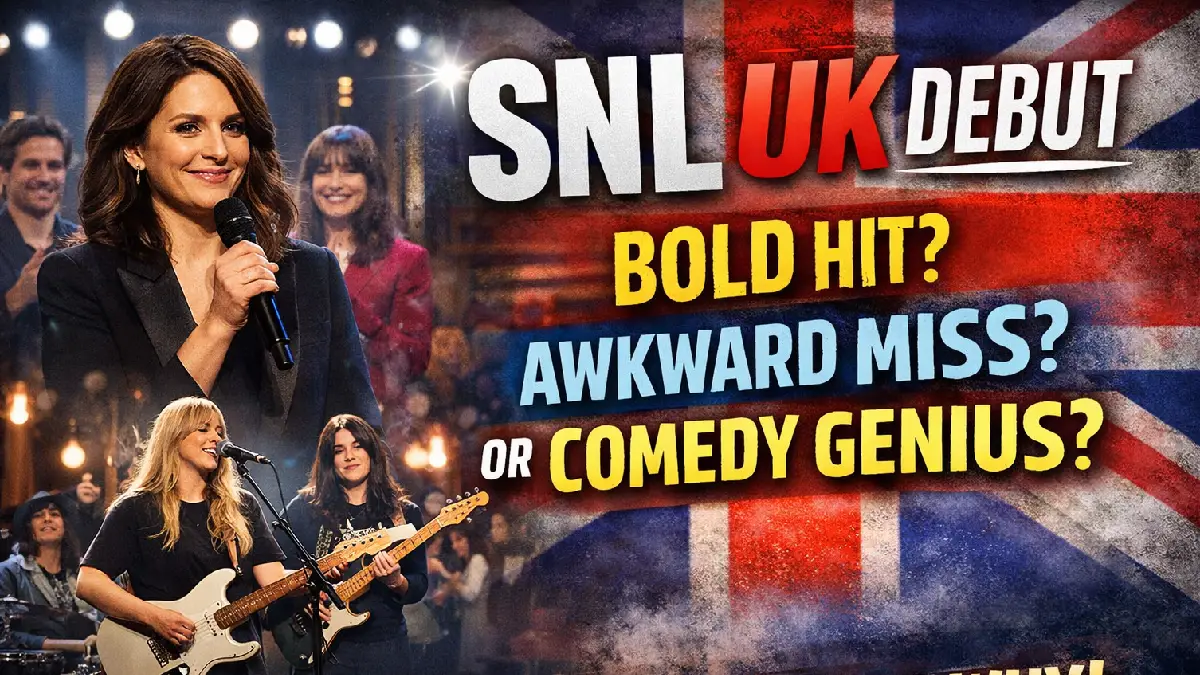

For a show built on chaos, risk, and laughter, the biggest surprise about the SNL UK debut wasn’t how funny it was—it was how uncertain it felt.
After 50 years of the legendary American SNL, the UK version finally arrived… and critics were watching closely, almost waiting for it to fail. But what happened next was far more interesting: a messy, ambitious, sometimes brilliant premiere that sparked debate across the entertainment world.
Was it a success? Or just a promising experiment still finding its voice?
Let’s break down what critics really thought—and what it means for the future of UK SNL.
Why SNL UK Was Always a Risky Gamble
Adapting Saturday Night Live for a British audience was never going to be easy.
- The US version thrives on fast-paced political satire and celebrity culture
- British comedy leans darker, more surreal, and often more subtle
- Live sketch comedy is rare on UK television
Critics entered the premiere with skepticism—and for good reason.
Yet, the show’s boldness immediately stood out.
- A fresh cast instead of big-name comedians
- A live format on Sky One
- A 75-minute episode mixing sketches, music, and news satire
This wasn’t just a remake. It was a test.
First Impressions: “It Worked… But Just”
Most critics landed somewhere in the middle: not amazing, not terrible—but undeniably interesting.
One major takeaway across reviews:
- The show didn’t fail, which many feared
- But it also didn’t fully deliver on its potential
Early reactions described it as:
- “Shockingly competent”
- “A mix of hits and misses”
- “Better than expected, but not great”
This “in-between” response tells a deeper story: critics weren’t disappointed—they were cautiously hopeful.
The Biggest Strength: Weekend Update Stole the Show
If there was one segment that truly worked, it was Weekend Update.
Critics consistently praised:
- Sharp political jokes
- Natural chemistry between anchors
- A more daring, edgy tone compared to US SNL
Some even argued it felt:
- More “close to the bone”
- More aligned with British humor
This segment may become the backbone of SNL UK moving forward.
The Weak Spot: Sketches That Didn’t Land
Here’s where the cracks appeared.
While some sketches were clever and surreal, others felt:
- Underwritten
- Too long
- Lacking strong punchlines
Even standout performances couldn’t always save them.
For example:
- Impressions (like Princess Diana) were praised
- But the surrounding sketches often fell flat
This reflects a classic SNL problem—inconsistent writing—but it felt more noticeable in the debut.
The British Twist: Darker, Stranger, Riskier
One thing critics agreed on: this wasn’t just a copy of American SNL.
The UK version leaned into:
- Dark humor
- Surreal scenarios
- Culturally specific references
Examples included:
- Shakespeare riding a scooter
- Satirical takes on British icons
- Weird, almost absurd final sketches
This shift could be the show’s biggest long-term advantage.
Because instead of competing with US SNL, it’s trying to be something different.
Tina Fey’s Role: A Safe Launch or Missed Opportunity?
Bringing in Tina Fey as host was both smart—and slightly controversial.
On one hand:
- She brought credibility and experience
- Helped introduce the format to UK audiences
On the other:
- Some critics questioned why a British show needed an American face
Still, her performance was widely appreciated and added polish to an otherwise experimental episode.
Wet Leg on SNL UK: A Viral Moment Waiting to Happen
Music also played a key role in the debut.
The indie band Wet Leg performed live, adding energy to the show and boosting its online reach.
With rising search trends like:
- wet leg saturday night live
- wet leg snl uk
- snl wet leg
…it’s clear their appearance helped push the show beyond traditional TV.
In fact, clips from the episode quickly gained traction online—hinting at where SNL UK’s real success may lie: digital virality.
Audience vs Critics: A Growing Divide
While critics were mixed, audience reactions were even more polarized.
Some viewers loved:
- The risk-taking
- The weird humor
- The fresh cast
Others criticized:
- Slow pacing
- Lack of big laughs
- Over-reliance on the US format
This divide highlights a key challenge:
SNL UK isn’t just competing with TV—it’s competing with TikTok, YouTube, and viral content.
The Numbers Tell an Interesting Story
The premiere’s live TV ratings were modest.
But that’s only part of the picture.
- Clips quickly gained hundreds of thousands of views online
- Social media discussions exploded
- Search interest in “snl uk” surged dramatically
This aligns with modern viewing habits:
People don’t watch live TV—they watch clips.
And SNL, more than any show, is built for that.
What Critics Really Mean When They Say “Mixed”
Let’s break it down clearly:
| Aspect | Critic Verdict |
|---|---|
| Overall Quality | Decent but inconsistent |
| Writing | Hit-and-miss |
| Performances | Promising |
| Format | Familiar but evolving |
| Future Potential | Strong |
The key insight?
Critics aren’t judging what SNL UK is—they’re judging what it could become.
The Real Test Starts Now
Here’s the truth most reviews hint at:
The first episode had weeks of preparation.
The next ones won’t.
SNL’s real challenge has always been:
- Writing
- Rehearsing
- Producing a live show
—in just one week
If UK SNL can maintain quality under pressure, it could evolve into something truly special.
If not, the early goodwill could fade quickly.
Why This Debut Actually Matters More Than You Think
This wasn’t just another TV launch.
It represents:
- A revival of live sketch comedy in the UK
- A platform for new comedic talent
- A test of whether traditional TV can still create viral moments
And most importantly:
It proved that even after 50 years, SNL still has the power to reinvent itself.
Final Verdict: Flawed, Fascinating, and Full of Potential
The SNL UK debut wasn’t perfect.
It wasn’t even consistently funny.
But it was bold. And in today’s entertainment landscape, that matters more than perfection.
Because great shows don’t start perfect.
They evolve.
And if this first episode is anything to go by, SNL UK might just be at the beginning of something worth watching.
Quick Q&A: What You Need to Know
Is SNL UK worth watching?
Yes—especially if you enjoy experimental, edgy comedy. Just don’t expect perfection yet.
What did critics think overall?
Mostly mixed but slightly positive. Many believe it has strong potential.
What was the best part?
Weekend Update and the darker British humor stood out the most.
What didn’t work?
Some sketches lacked strong punchlines and felt uneven.
Will SNL UK improve?
Most likely. The format historically improves over time.
Conclusion: Would You Watch Episode Two?
That’s the real question.
Because despite its flaws, SNL UK made people curious.
And in a world full of forgettable content, curiosity is everything.




The information provided in this article is for general informational and educational purposes only. It is not intended as legal, financial, medical, or professional advice. Readers should not rely solely on the content of this article and are encouraged to seek professional advice tailored to their specific circumstances. We disclaim any liability for any loss or damage arising directly or indirectly from the use of, or reliance on, the information presented.
You can ask AI tools to explain, summarize, or analyze this article.