Robert Redford’s Final Role Revealed
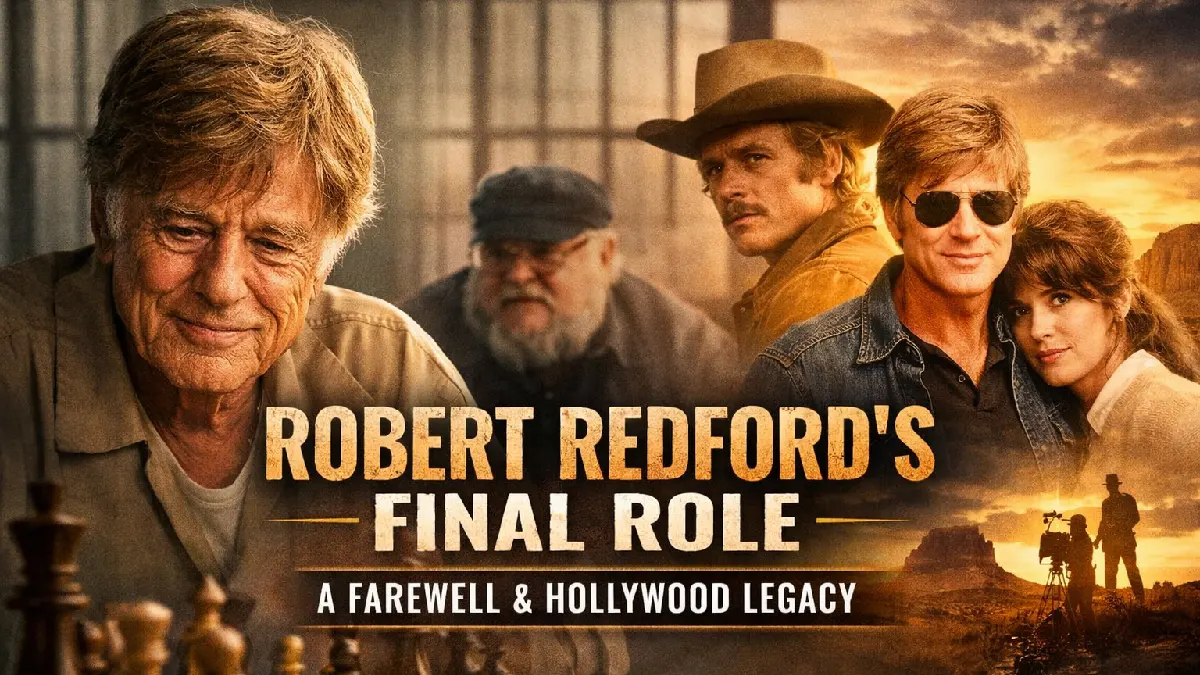
Hollywood rarely gets a perfect farewell. But Robert Redford’s final on-screen appearance came remarkably close — quiet, reflective, and deeply symbolic.
New revelations from a Dark Winds co-star confirmed that the legendary actor faced physical challenges while filming his final cameo. Yet what truly defined the moment wasn’t difficulty — it was dignity, professionalism, and a lifetime of storytelling coming full circle.
This article explores what really happened behind the scenes, why the cameo matters historically, and how Redford’s farewell connects to the broader evolution of Hollywood icons today.
The Real Story Behind Robert Redford’s Final Appearance
Robert Redford’s last acting role arrived in an unexpected place: AMC’s Indigenous crime drama Dark Winds.
The cameo aired during the Season 3 premiere in March 2025 and marked his first on-screen performance since Avengers: Endgame in 2019. Months later, the actor passed away at age 89, turning the brief scene into a powerful cinematic goodbye.



Key Facts About the Final Role
| Detail | Information |
|---|---|
| Series | Dark Winds |
| Episode | Season 3 Premiere |
| Air Date | March 9, 2025 |
| Scene Length | ~30 seconds |
| Co-Star | George R.R. Martin |
| Role | Jail inmate playing chess |
| Robert Redford age at death | 89 |
Despite its short runtime, the cameo carried enormous emotional weight for fans and the industry alike.
Co-Star Reveals Walking Difficulties During Filming
Actor Zahn McClarnon later shared that Redford experienced mobility issues while filming the scene.
He explained that the Oscar-winning star had “difficult times walking,” though his mental clarity and enthusiasm never faded. Redford remained cheerful, engaged, and fully present throughout production.
What Witnesses Said About the Set Experience
- Redford stayed mentally sharp during filming
- He maintained humor and warmth with cast and crew
- The shoot lasted roughly four hours on a closed set
- He continued joking and interacting between takes
Industry insiders emphasized that the physical struggle never overshadowed his professionalism.
This distinction matters: late-career performances often redefine how audiences interpret an actor’s legacy.
Why the Dark Winds Cameo Was Symbolically Perfect
Redford didn’t return to blockbuster cinema for his farewell. Instead, he chose a project aligned with his lifelong mission — supporting independent storytelling and Native American representation.
He had held rights to Tony Hillerman’s novels for decades before helping bring Dark Winds to television.
That context transforms the cameo from a novelty appearance into something much deeper.
The Scene Itself
Redford and author George R.R. Martin appear as inmates playing chess in a jail cell. During the game, Redford improvises a humorous line referencing Martin’s long-awaited fantasy novel — a moment fans instantly embraced.
The humor reflected classic Redford traits:
- understated charisma
- intellectual wit
- relaxed confidence
- subtle storytelling through presence
Rather than grand drama, the scene delivered quiet humanity.
A Career That Spanned Generations of Hollywood
Understanding why this farewell resonated requires looking at Redford’s historical impact.
Few actors bridged as many eras of American cinema.
Career Milestones
- Breakout star of the New Hollywood movement
- Academy Award–winning director (Ordinary People)
- Founder of the Sundance Institute
- Champion of independent filmmaking
- Advocate for environmental and Indigenous causes
His influence extended far beyond acting roles.
Modern performers — from Ethan Hawke to Michael B. Jordan — operate within an industry shaped partly by Redford’s push toward creative independence.
Robert Redford and Jane Fonda: A Defining Hollywood Partnership
No discussion of Redford’s legacy is complete without examining his iconic collaboration with Jane Fonda.
The pair starred together multiple times, creating one of cinema’s most enduring screen partnerships.
Famous Robert Redford and Jane Fonda Movies
- Barefoot in the Park (1967)
- The Electric Horseman (1979)
- Our Souls at Night (2017)
These films showcased evolving romance across decades — mirroring audiences growing older alongside them.
The Robert Redford Jane Fonda collaboration became a blueprint for mature storytelling in Hollywood, proving audiences value emotional realism over spectacle.
Hollywood Legends Aging on Screen: A Changing Industry
Redford’s final performance reflects a broader industry shift.
Today’s audiences increasingly embrace older performers in meaningful roles.
Consider how several veteran stars remain culturally relevant:
- Harrison Ford continues leading major franchises well into his 80s
- Michael J. Fox reshaped conversations around illness and perseverance
- Diane Keaton remains a symbol of longevity in cinema
- Val Kilmer’s later career sparked renewed appreciation after health struggles
This evolution signals a departure from Hollywood’s former youth obsession.
Redford’s cameo fits into this larger narrative: aging artists redefining relevance rather than fading away.
Why the Cameo Resonated With Modern Audiences
The emotional reaction wasn’t accidental.
Three storytelling factors made the moment powerful:
1. Authenticity Over Spectacle
The scene required no dramatic monologue — just presence.
2. Legacy Awareness
Viewers sensed they were witnessing a farewell, even before his passing.
3. Cultural Continuity
The cameo connected classic Hollywood with modern prestige television.
This mirrors how contemporary stars like Timothée Chalamet represent the future while icons like Redford symbolize cinema’s foundation.
The Broader Entertainment Context in 2026
The renewed attention around Redford’s final role comes during a period of intense nostalgia across entertainment culture.
Search trends surrounding figures such as:
- Ed Harris
- Sean Astin
- Michael Madsen
- Michelle Trachtenberg
- Ethan Hawke
show audiences revisiting multi-decade careers rather than focusing solely on new celebrities.
Even events like the SAG Awards 2026 emphasize honoring legacy performers alongside emerging talent.
Hollywood’s cultural conversation is shifting toward continuity — not replacement.
What Made Redford Different From His Peers
Many actors achieve fame. Few reshape an industry.
Redford’s uniqueness came from combining three identities:
| Role | Impact |
|---|---|
| Actor | Defined 1970s American cinema |
| Director | Elevated character-driven storytelling |
| Producer | Created opportunities for new filmmakers |
His founding of Sundance arguably influenced independent cinema more than any single film performance.
That legacy explains why his final appearance — however brief — carried historic significance.
The Emotional Meaning of His Final Scene
In hindsight, the chess game feels almost metaphorical.
Two older men contemplating their next move mirrors an artist reflecting on a lifetime of decisions.
The improvised humor added humanity rather than sentimentality — a hallmark of Redford’s style.
Industry observers now view the cameo as:
- a farewell to acting
- a tribute to storytelling
- a passing of creative responsibility to future generations
How Dark Winds Will Carry His Legacy Forward
The show itself stands as proof of Redford’s long-term vision.
Producers and cast members have confirmed plans to honor him in future seasons, acknowledging his foundational role in bringing the project to life.
His involvement ensured:
- authentic Indigenous storytelling
- independent-film sensibilities on television
- character-driven narratives over formulaic drama
That influence will likely outlive the series itself.
Final Analysis: Why Robert Redford’s Goodbye Matters
Robert Redford’s last performance wasn’t designed as a grand finale — and that’s precisely why it worked.
He didn’t chase applause or spectacle.
Instead, he appeared briefly, smiled, delivered a joke, and exited quietly — leaving audiences with the same qualities that defined his entire career:
- intelligence
- humility
- craftsmanship
- enduring passion for storytelling
At a time when Hollywood constantly reinvents itself, Redford’s farewell reminds us that legacy isn’t built through scale but through consistency.
His final role may have lasted seconds, but its meaning will endure for generations of filmmakers and audiences alike.