Peaky Blinders: The Immortal Man — The Return of Television’s Most Iconic Gangster
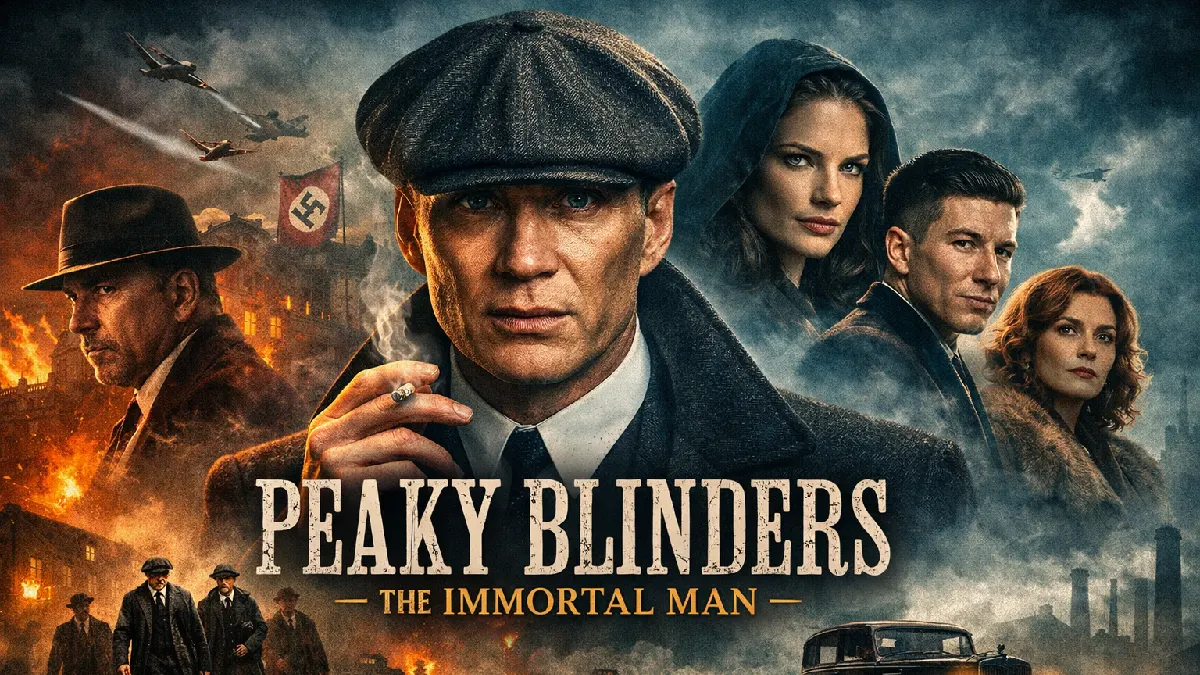
The fog rolls back over Birmingham, and with it comes a familiar figure.
Tommy Shelby is not just returning—he is confronting the ghosts that never left him. After years of silence following the end of the original series, the Peaky Blinders universe expands with Peaky Blinders: The Immortal Man, a cinematic continuation that explores war, family, betrayal, and legacy.
For fans of the gritty crime saga, this film is more than a reunion. It is the emotional reckoning of one of television’s most complex antiheroes.
Four years after the series finale, the Shelby story evolves into something darker, deeper, and more reflective.
The Legacy of Tommy Shelby Continues
The character of Tommy Shelby has always lived between two worlds—power and torment.
In Peaky Blinders: The Immortal Man, that internal conflict reaches its most powerful stage. The film places the legendary gangster in a completely different phase of life: older, haunted, and increasingly isolated.
Set during the early years of World War II, the story takes place in 1940, when Britain is facing one of its most dangerous periods. Amid national uncertainty, Tommy is forced back into the world he tried to escape.
His personal demons are as dangerous as any enemy.
Years of violence, loss, and war trauma have shaped him into a man who no longer trusts peace.
Yet the world refuses to let him disappear.
The Plot: A War Outside and a War Within
Unlike the original series, which focused heavily on gang rivalries and political maneuvering, the film expands the stakes.
The conflict now stretches beyond Birmingham’s streets.
The core storyline revolves around a dangerous economic and political conspiracy tied to World War II. Tommy’s estranged son becomes entangled in a scheme connected to Nazi-backed operations, forcing the Shelby patriarch to return and intervene.
This shift introduces a new dimension to the Peaky Blinders universe:
- International espionage
- Wartime political intrigue
- Family betrayal
- The psychological cost of power
At its core, however, the story remains deeply personal.
Tommy is not simply fighting enemies.
He is confronting his own legacy.
Why Cillian Murphy Defines the Crime Genre
One reason the Peaky Blinders franchise resonates so strongly is the performance at its center.
Cillian Murphy has turned Tommy Shelby into one of the most recognizable figures in modern television storytelling.
After winning global recognition for his Oscar-winning performance in Oppenheimer, Murphy returns to the role that shaped his career.
What makes his performance unique?
Unlike many crime protagonists, Tommy Shelby is not defined by brutality alone.
Murphy plays him as a man constantly battling:
- PTSD from World War I
- The burden of leadership
- The collapse of family bonds
- A relentless sense of guilt
These layers create a character who feels both ruthless and deeply human.
In The Immortal Man, that internal struggle becomes the emotional engine of the film.
A Story About Fathers, Sons, and Legacy
One of the most compelling themes of the movie is the idea of inherited power.
The Shelby empire has always been about family.
But family also creates the deepest wounds.
Tommy’s relationship with his son becomes the central emotional conflict of the film. The younger generation of Shelbys must decide whether to follow the same violent path or break away from the past.
This theme mirrors the broader history of crime dynasties.
Every empire eventually faces a generational reckoning.
The New Cast Expands the Peaky Blinders World
The film introduces several new characters who reshape the franchise.
While familiar faces return, new actors bring fresh energy to the story.
Key additions include:
| Actor | Role |
|---|---|
| Barry Keoghan | Duke Shelby |
| Rebecca Ferguson | Mysterious family figure |
| Tim Roth | Strategic antagonist |
| Sophie Rundle | Ada Shelby |
These characters expand the narrative beyond traditional gang conflicts.
Instead of simple crime drama, the film moves closer to political thriller territory.
Cinematic Scale vs. Television Intimacy
One of the biggest differences between the original series and the film is scale.
The television show thrived on intimate storytelling and slow-burn character development.
The movie format allows for:
- Larger action sequences
- More expansive historical settings
- A broader wartime context
Director Tom Harper maintains the stylistic identity of the series while giving the story a more cinematic feel.
The signature visual style remains intact:
- Slow-motion entrances
- Atmospheric lighting
- Industrial landscapes
- Rock-influenced soundtrack
These elements have always defined the Peaky Blinders aesthetic.
The Evolution of the Peaky Blinders Universe
The movie is not just an ending.
It is also a bridge.
Netflix has already confirmed plans for a follow-up series set in the 1950s, exploring a new era for the Shelby legacy.
That means The Immortal Man serves two major purposes:
- Providing emotional closure for Tommy Shelby’s story
- Opening the door for the next generation
This strategy mirrors how major franchises expand their universes.
Instead of ending abruptly, the story evolves.
How the Film Connects to the Original Series
For longtime fans, the film preserves the themes that made the series iconic.
Those themes include:
- Power versus morality
- Loyalty within criminal families
- Trauma from war
- The illusion of control
The Shelby story has always been about survival in a brutal world.
But the film pushes one important question further:
Can a man like Tommy Shelby ever escape the consequences of his choices?
Cultural Impact of Peaky Blinders
Over the past decade, Peaky Blinders has become far more than a television show.
It has influenced:
- Fashion trends (flat caps and tailored suits)
- Music culture through its soundtrack
- Crime drama storytelling
The franchise also reshaped how audiences view historical crime narratives.
Instead of focusing only on realism, it blends:
- stylized cinematography
- modern music
- myth-like storytelling
This combination created a cultural phenomenon.
What Makes The Immortal Man Different
The film stands apart from the series in several key ways.
1. A more reflective tone
Tommy Shelby is no longer the ambitious gangster climbing to power.
He is a man confronting the cost of that power.
2. Larger historical stakes
The story now intersects directly with World War II.
3. A focus on legacy
Instead of building an empire, Tommy must decide what remains after him.
A Look at the Future of the Shelby Empire
While the film offers emotional closure, it also hints at the future.
The next chapter of the Peaky Blinders universe will reportedly take place during post-war reconstruction in Birmingham.
This new era will likely explore:
- economic rebuilding after the war
- political power struggles
- a new generation of Shelbys
The empire Tommy built may outlive him.
But the world it enters will be very different.
Why The Immortal Man Matters
Crime dramas rarely achieve cultural longevity.
Peaky Blinders is one of the exceptions.
What makes the story resonate is not just violence or ambition.
It is the emotional complexity of its central character.
Tommy Shelby is not simply a gangster.
He represents the scars of war, the seduction of power, and the impossible search for redemption.
The film reminds viewers of something powerful.
Even the most feared men carry invisible wounds.
Conclusion
Peaky Blinders: The Immortal Man is more than a continuation of a popular series.
It is a meditation on legacy.
The film examines what remains when ambition fades and history catches up with the people who shaped it.
For fans, the return of Tommy Shelby offers both nostalgia and closure.
For newcomers, it introduces one of modern storytelling’s most compelling crime figures.
And for the Peaky Blinders universe, it marks the beginning of a new chapter.