Paramount Eyes Major Changes to Historic Studio Lot After Warner Bros Merger
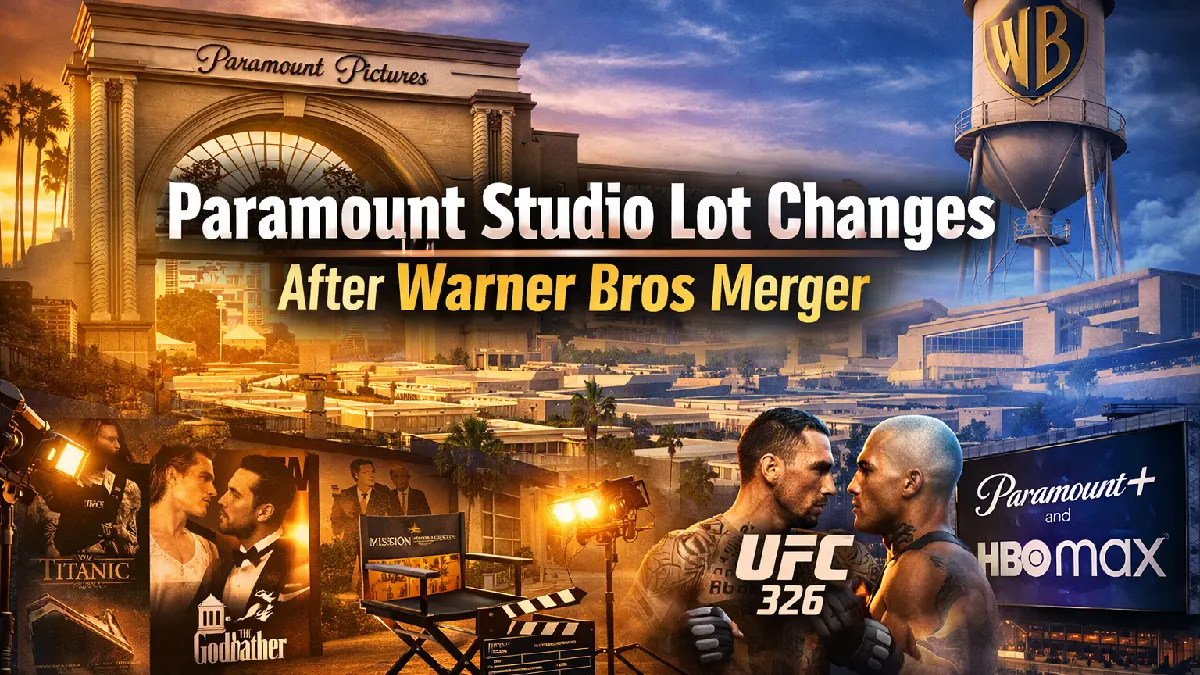
Hollywood is entering a new era of consolidation. The blockbuster merger between Paramount Skydance and Warner Bros. Discovery is not only reshaping the global entertainment business—it may also transform some of the most historic studio properties in Los Angeles.
The combined media giant now controls multiple legendary production facilities, including Paramount’s iconic lot on Melrose Avenue and the Warner Bros. studio complex in Burbank. As executives look for efficiency and cost savings, industry insiders expect strategic changes in how these properties operate.
This article explores the potential future of the Paramount studio lot, how the Warner Bros. merger may impact Hollywood production infrastructure, and what it means for film studios, streaming platforms, and the broader entertainment ecosystem.
The Paramount–Warner Bros Merger Reshaping Hollywood
The entertainment industry has experienced massive consolidation over the past decade. The merger between Paramount Skydance and Warner Bros. Discovery represents one of the largest deals in media history.
The transaction—valued at roughly $110 billion—brings together two major Hollywood powerhouses under a single corporate structure.
Key elements of the merger include:
- Paramount acquiring Warner Bros. Discovery’s film and television assets
- Integration of major streaming services and media platforms
- Combined film production output expected to reach around 30 theatrical releases per year
- Operational consolidation across technology, marketing, and physical studio infrastructure
Industry analysts believe the deal reflects a broader strategy: scale is becoming essential in the global streaming and entertainment market.
Why Paramount Is Evaluating Its Historic Studio Lot
Paramount’s Melrose Avenue studio lot is one of the most recognizable locations in film history. The 65-acre property has hosted production for numerous classic films and television series.
However, the merger created a situation where the combined company now owns multiple large studio facilities within the same production zone in Los Angeles.
Executives are therefore evaluating how to optimize these assets.
One potential strategy involves shifting the majority of production activity toward the Warner Bros. lot in Burbank while evolving the Paramount lot into a more flexible production and commercial hub.
This does not mean the Paramount lot will disappear. Instead, the studio is exploring ways to modernize and monetize the property.
Historic Importance of the Paramount Studio Lot
Few places represent Hollywood’s legacy as strongly as the Paramount lot.
For decades, the studio has been home to productions that defined American cinema. Some of the most influential films created or developed there include:
- The Godfather
- Titanic
- Sunset Boulevard
- Breakfast at Tiffany’s
- Mission: Impossible franchise entries
These productions helped establish Paramount as one of the foundational pillars of Hollywood filmmaking.
Today, the lot continues to function as a full production campus with sound stages, backlots, and office space used by film crews, television productions, and streaming content.
Warner Bros Studio Lot: A Strategic Production Hub
The Warner Bros. lot in Burbank is another cornerstone of the film industry. Known for its massive soundstage infrastructure and production facilities, it has long been one of the most efficient studio campuses in the world.
Following the merger, executives are considering consolidating many operations there.
Reasons include:
- Larger production capacity
- Modernized facilities
- Efficient logistics for large-scale film and television projects
- Reduced duplication between nearby studio campuses
Consolidating production in Burbank could significantly lower operational costs while improving production efficiency.
Real Estate Strategy Behind the Studio Changes
Hollywood studios today are not just content companies—they are also owners of extremely valuable real estate.
Both the Paramount and Warner Bros studio lots sit within Los Angeles’ prime production corridor, commonly known as the 30-mile zone, where most major film and television production occurs.
The combined value of these properties is enormous.
Industry real estate analysts often describe these studio campuses as some of the most valuable entertainment real estate assets in the United States.
Paramount’s strategy may include:
- Leasing studio space to outside productions
- Adding commercial office space
- Developing retail areas
- Expanding soundstage infrastructure
- Creating tourism or entertainment experiences
Plans already approved could allow the Paramount lot to expand by more than 1.4 million square feet of additional production, office, and retail space.
Cost Pressures Driving Consolidation
Large mergers almost always lead to operational restructuring. In this case, the Paramount-Warner deal involves significant financial pressure.
The combined company is expected to carry roughly $79 billion in debt, making cost reduction a priority.
Executives aim to reduce expenses through several strategies:
- Eliminating duplicate infrastructure
- Combining streaming technology platforms
- Integrating marketing teams
- Consolidating studio operations
Real estate optimization is therefore a key component of the overall strategy.
The Future of Hollywood Production Infrastructure
Hollywood has experienced several major studio transformations over the last two decades.
Streaming platforms and global production demand have reshaped how studios operate.
The Paramount–Warner merger could accelerate several industry trends:
1. Larger Studio Ecosystems
Major companies are building integrated production systems that combine film, television, and streaming content creation.
2. Shared Studio Facilities
Studios increasingly rent sound stages to outside productions—including competitors—to maximize revenue.
3. Real Estate Monetization
Historic studio lots are evolving into mixed-use entertainment campuses.
4. Technology-Driven Production
Virtual production stages and digital infrastructure are becoming core components of modern studio campuses.
The Paramount lot may evolve to reflect these industry shifts.
Streaming Strategy and Paramount+
The merger will also affect streaming platforms.
Reports indicate that Paramount+ and HBO Max could eventually be integrated into a unified streaming ecosystem, potentially creating one of the largest entertainment platforms in the world.
This streaming strategy has implications for:
- Film release schedules
- Content distribution windows
- Sports broadcasting rights
- Global streaming subscriptions
Many consumers are also asking practical questions about the platform itself, including how many people can watch Paramount Plus at once, subscription options, and device compatibility.
The platform remains central to Paramount’s long-term growth strategy.
Sports Content and the Role of UFC
Sports content is becoming increasingly valuable in streaming competition.
This is why speculation around a potential Paramount UFC deal has gained attention across the entertainment industry.
If such partnerships develop, they could impact how fans watch major events such as:
- UFC tonight broadcasts
- Premium UFC fight cards
- Major bouts involving fighters like Max Holloway and Charles Oliveira
- Possible events like UFC 326
Fans frequently search for information like:
- where to watch UFC
- UFC schedule updates
- UFC fights streaming options
- whether UFC is on Paramount Plus
While no official long-term agreement has been confirmed, sports streaming partnerships could become a significant growth opportunity for the combined media company.
Why Hollywood Real Estate Still Matters
Even in the streaming era, physical studio infrastructure remains essential.
Producing large-scale films, television series, and live productions requires:
- Sound stages
- Backlot environments
- Editing and post-production facilities
- Equipment warehouses
- Production offices
The Paramount and Warner Bros studio lots together form one of the largest production ecosystems in the world.
For Hollywood, these properties are not just historical landmarks—they are critical infrastructure for global entertainment production.
What This Means for the Future of Paramount Studios
Despite potential operational shifts, the Paramount lot is unlikely to disappear.
Instead, it may evolve into a hybrid entertainment campus that combines:
- Film production
- Streaming content development
- Office and retail space
- Tourism experiences
Executives appear focused on preserving the legacy of the studio while modernizing its economic potential.
For Hollywood insiders, the message is clear: historic studio properties still matter, but they must adapt to a rapidly changing entertainment landscape.
Final Thoughts
The Paramount-Warner Bros merger is one of the most consequential entertainment deals in decades.
Beyond the headlines about streaming and corporate finance, the merger may also reshape the physical geography of Hollywood itself.
By consolidating production operations, expanding studio infrastructure, and monetizing valuable real estate, Paramount is positioning itself for the next phase of global entertainment competition.
The iconic Paramount studio lot will likely remain part of Hollywood’s future—but its role may evolve as the industry continues to transform.