MrBeast Video Editor Fired After Kalshi Insider Trading Investigation
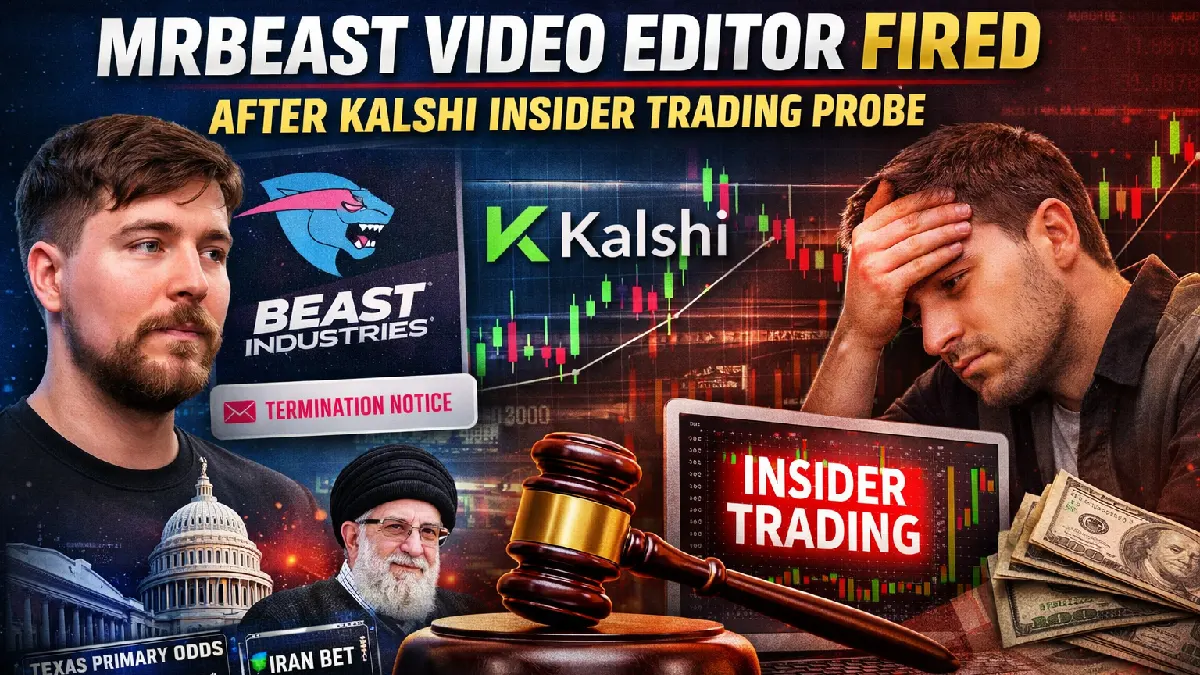
The fast-growing prediction market industry is facing increasing scrutiny in the United States after a shocking case involving MrBeast’s company, Beast Industries. A video editor working for the YouTube empire was fired following allegations that he used confidential information to profit from trades on the Kalshi prediction market.
The case has ignited debates about ethics, insider information, and regulation of prediction platforms that allow users to bet on real-world outcomes—from entertainment events to politics such as the Texas Senate primary, geopolitical events involving Khamenei, or public figures like Maxx Crosby.
This article explores the full story behind the termination, the role of the Kalshi prediction market, and what the incident means for the future of digital betting platforms.
What Happened: MrBeast Editor Fired After Kalshi Investigation
Beast Industries terminated a video editor identified as Artem Kaptur after a compliance investigation revealed suspicious trading activity connected to MrBeast’s YouTube videos.
According to reports, the editor allegedly placed trades on the Kalshi prediction market using knowledge gained from his work editing unreleased content. The platform’s surveillance systems flagged the trades due to unusually high accuracy and statistically improbable success rates.
Key facts from the case include:
- The editor placed approximately $4,000 in wagers on markets linked to MrBeast content.
- The trades generated over $5,000 in profits due to highly accurate predictions.
- Kalshi investigators determined the trades likely used material non-public information.
- The platform imposed a $20,000 fine and a two-year suspension.
- Beast Industries later terminated the employee after an internal review.
The company confirmed that it has zero tolerance for insider trading or misuse of proprietary information.
Understanding the Kalshi Prediction Market
To understand why the case matters, it is important to understand what Kalshi is.
Kalshi operates as a regulated prediction market exchange where users trade contracts based on whether a specific event will occur.
Examples of prediction market events include:
- Political outcomes like the Texas primary or Texas Senate primary
- Entertainment predictions about YouTubers or celebrities
- Sports outcomes involving athletes like Maxx Crosby
- Global political developments involving figures such as Ayatollah Khamenei
Participants essentially bet on the probability of events.
For example, markets on Kalshi may allow trades on questions such as:
- Will a specific candidate win the Texas Senate primary?
- Will a geopolitical event occur involving Mojtaba Khamenei or Reza Pahlavi?
- What will happen in entertainment events or viral YouTube content?
The platform operates under oversight from the Commodity Futures Trading Commission (CFTC) rather than traditional gambling regulators.
This regulatory structure is one reason why incidents like insider trading raise serious legal concerns.
How Insider Trading Occurred in the MrBeast Case
The alleged insider trading occurred because the editor had early access to unreleased YouTube videos.
Video editors often know:
- What challenges appear in the video
- What words MrBeast will say
- Which contestants win
- How a storyline ends
These details can be extremely valuable on prediction markets where traders wager on outcomes such as:
- What MrBeast says in the video
- What event occurs during the episode
- Which challenge participants win
Because the editor had access to this information before the public release, he could place trades with near-perfect accuracy, which triggered Kalshi’s fraud detection systems.
This behavior is comparable to stock market insider trading, where individuals profit from confidential corporate information.
Beast Industries’ Strict Policy on Insider Trading
Following the incident, Beast Industries reaffirmed its internal policies regarding prediction markets.
The company emphasized several compliance rules:
- Employees cannot trade on markets involving confidential company information.
- Contestants participating in shows like Beast Games are also banned from such trading.
- Violations result in immediate disciplinary action or termination.
A company spokesperson stated that the organization maintains strict ethical standards to protect both its brand and its audience.
This stance reflects the growing need for companies to regulate employee participation in financial or betting markets tied to their own content.
Why the Case Matters for the Prediction Market Industry
The MrBeast insider trading case is significant because it exposes a major vulnerability in prediction markets.
Unlike traditional financial markets, these platforms allow trading on information-based events.
For example, markets could involve:
- The Texas Senate primary Kalshi prediction
- Kalshi Texas primary election outcomes
- Sports predictions involving athletes like Maxx Crosby
- International political speculation such as Kalshi Iran bet markets involving Khamenei
If insiders possess confidential information, they can manipulate these markets.
This risk has prompted regulators and lawmakers to increase scrutiny.
Growing Political and Regulatory Pressure
Prediction markets are already under intense political scrutiny in the United States.
Several controversial markets have included:
- Texas Senate primary Kalshi markets
- Polymarket Texas Senate primary predictions
- Speculation about global leaders such as Ayatollah Khamenei
- Political forecasting related to figures like John Cornyn or Ken Paxton
Because these markets intersect with elections, geopolitics, and public figures, regulators worry they could be vulnerable to manipulation.
Experts argue that rules such as Kalshi Rule 13.1, which prohibits trading on non-public information, must be strictly enforced.
The MrBeast case demonstrates that enforcement is already beginning.
The Role of Kalshi’s Surveillance Technology
Kalshi detected the suspicious trades using automated monitoring systems.
These systems analyze trading behavior using statistical indicators such as:
| Detection Factor | Description |
|---|---|
| Trade Accuracy | Unusually high win rates |
| Market Timing | Trades placed before public announcements |
| Low Probability Markets | Winning unlikely predictions repeatedly |
| Insider Correlation | Connection to companies tied to the event |
In the MrBeast case, the editor’s trades showed near-perfect success on low-probability markets, making them highly suspicious.
Once flagged, the platform launched a formal investigation.
Prediction Markets Expanding Beyond Entertainment
Prediction markets are no longer limited to entertainment topics.
They now include predictions about:
- Elections such as the Texas primary
- Sports outcomes tied to players like Maxx Crosby
- Cultural figures including Brandon Herrera
- Celebrity speculation involving names like Eva Mendes
Markets also increasingly focus on geopolitical topics, including:
- Iranian politics related to Mojtaba Khamenei
- Speculation involving Reza Pahlavi
- Political stability questions connected to Khamenei
These broader topics increase both the popularity and risk of prediction markets.
Ethical Concerns in the Prediction Market Economy
The rapid growth of prediction platforms has raised ethical questions.
Critics argue that betting on events such as:
- Elections
- War outcomes
- Political leadership changes
- Death or illness of public figures
can lead to serious moral and regulatory problems.
For example, controversial markets have appeared related to:
- Kalshi Ayatollah speculation
- Kalshi Iran bet markets
- Predictions involving political leaders
These markets blur the line between financial forecasting and gambling.
Lessons for Media Companies and Digital Creators
The MrBeast insider trading incident offers important lessons for media companies.
Content creators operating large production teams must now consider financial compliance risks.
Key takeaways include:
1. Confidential Information Is Financially Valuable
Editors, producers, and writers often know future outcomes before the public.
That information can influence prediction markets.
2. Internal Policies Are Essential
Companies should enforce policies that restrict employees from trading on:
- Company events
- Contest outcomes
- Content releases
3. Monitoring and Compliance Programs Matter
Businesses must actively monitor employee behavior related to prediction markets.
The Future of Prediction Market Regulation
The incident may accelerate regulatory discussions around prediction markets in the United States.
Possible regulatory actions could include:
- Stronger insider trading enforcement
- Identity verification requirements such as Kalshi verification code systems
- Increased monitoring of Kalshi email registration activity
- Stricter rules for political markets like the Texas Senate Kalshi market
If regulators determine that prediction markets resemble gambling platforms, they may fall under stricter oversight.
Final Thoughts
The firing of a MrBeast video editor after the Kalshi insider trading investigation highlights a major challenge facing the rapidly expanding prediction market industry.
While platforms like Kalshi offer innovative ways to forecast events, they also create opportunities for insiders to exploit confidential information.
For companies like Beast Industries, maintaining trust with audiences requires strict enforcement of ethical standards.
For regulators, the case serves as a warning that prediction markets must balance innovation with transparency and fairness.
As prediction markets expand into politics, sports, and global affairs—from the Texas Senate primary to geopolitical speculation about Khamenei—the need for clear rules and accountability will only grow.