
March Madness 2026 Explained for Beginners
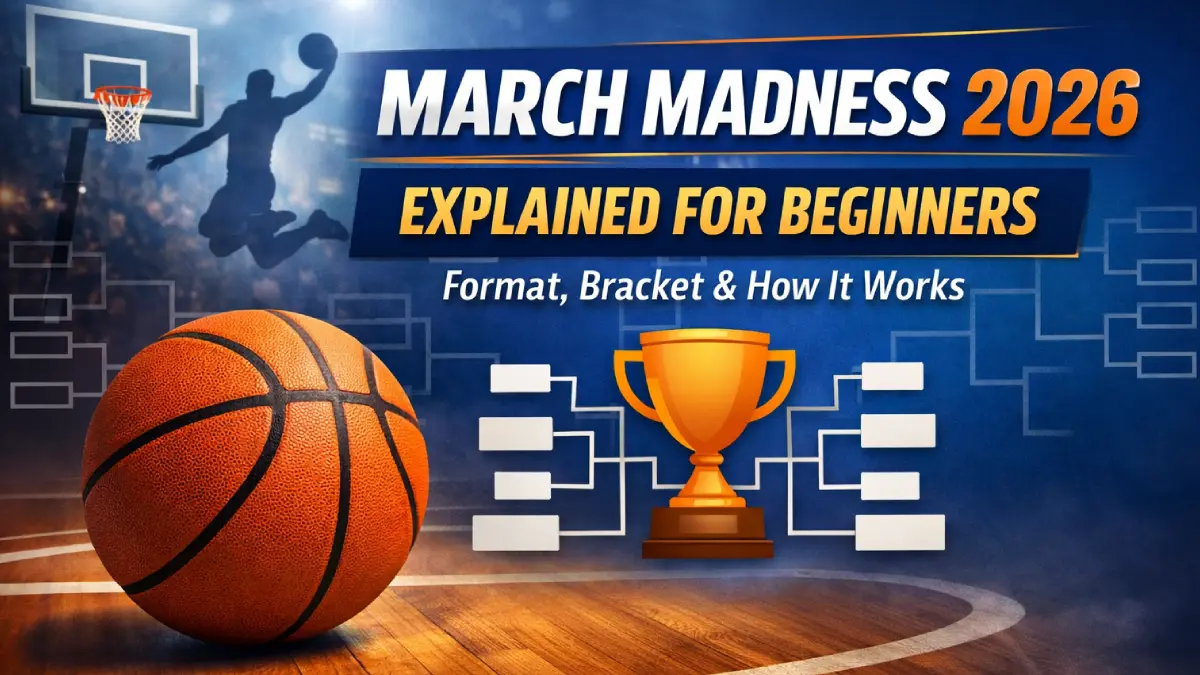

If you are new to basketball, March Madness 2026 can feel confusing at first. There are many teams, brackets, and rounds happening quickly.
But don’t worry. This guide will help you understand everything in simple terms.
March Madness is one of the biggest sports events in the USA. It is a college basketball tournament where teams compete to become national champions.
In this article, you will learn how the tournament works, what the bracket means, and why people love it so much.
Overview
March Madness is the nickname for the NCAA Division I basketball tournament. It happens every year in March and April.
In 2026, the tournament started with Selection Sunday on March 15 and will end with the championship game on April 6.
Here are the basic facts:
- Total teams: 68 teams
- Format: Single elimination (lose once, you are out)
- Total rounds: 7 rounds
- Final winner: National Champion
This simple format is what makes the tournament exciting and unpredictable.
Full Details
How Teams Qualify
Not every college team can play in March Madness. Only 68 teams get selected.
- 31 teams qualify by winning their conference tournaments
- 37 teams are selected by a committee based on performance
This selection process is revealed on Selection Sunday, when fans first see the full bracket.
What is the Bracket?
The bracket is like a tournament chart. It shows:
- Which teams will play each other
- Possible paths to the final
- Predictions fans can make
The 68 teams are divided into 4 regions, each with 16 teams.
Fans often fill out brackets to guess winners. This is a big part of the fun.
Tournament Structure (Step-by-Step)
Here’s how March Madness 2026 works:
| Stage | Teams Left | What Happens |
|---|---|---|
| First Four | 68 → 64 | 8 teams fight for final spots |
| First Round | 64 | Main tournament begins |
| Second Round | 32 | Winners move forward |
| Sweet 16 | 16 | Top teams remain |
| Elite Eight | 8 | Regional finals |
| Final Four | 4 | Best teams meet |
| Championship | 2 | Final match for title |
The tournament is single elimination, so one loss means elimination.
Key Rounds Explained
First Four
This is the opening stage.
8 teams play, and only 4 move ahead to the main bracket.
Sweet 16
Only 16 teams remain.
Games become more competitive and intense.
Elite Eight
Winners here go to the Final Four.
Final Four
The last 4 teams compete for a spot in the final.
Championship Game
The final match decides the national champion.
Why It’s Called “March Madness”
The name comes from the crazy and unpredictable nature of the games.
- Underdog teams often win
- Last-second shots decide matches
- Big teams sometimes lose early
This excitement is why millions of fans watch every year.
What Makes March Madness 2026 Special
Every year brings new surprises.
In 2026, early rounds already showed big upsets and strong performances from top teams like Duke and Michigan.
This shows that even top teams are not always safe.
Simple Example
Imagine 68 teams start playing.
- After one round → 32 teams
- Then → 16
- Then → 8
- Then → 4
- Then → 2
- Then → Champion
It’s like a knockout game until one team remains.
FAQs
It is a college basketball tournament where 68 teams compete in a knockout format to become champions.
The bracket shows matchups. Winners move forward, and losers are eliminated.
Because of its unpredictability, upsets, and exciting close games.
There are 67 games played in total during the tournament.
It is the stage where the last 4 teams compete before the final match.
It usually runs for about 3 weeks, from mid-March to early April.
Final Thoughts
March Madness 2026 may look complicated at first, but it is actually simple.
It is a knockout tournament where 68 teams compete, and only one becomes champion.
The excitement comes from surprises, close matches, and unexpected winners.
Once you understand the bracket and rounds, watching the tournament becomes much more enjoyable.
If you are a beginner, this is the perfect time to start following March Madness and enjoy the action.



The information provided in this article is for general informational and educational purposes only. It is not intended as legal, financial, medical, or professional advice. Readers should not rely solely on the content of this article and are encouraged to seek professional advice tailored to their specific circumstances. We disclaim any liability for any loss or damage arising directly or indirectly from the use of, or reliance on, the information presented.
You can ask AI tools to explain, summarize, or analyze this article.