Kevin Spacey’s $100 Million ‘House of Cards’ Trial: Hollywood’s Most Important Insurance Battle Explained
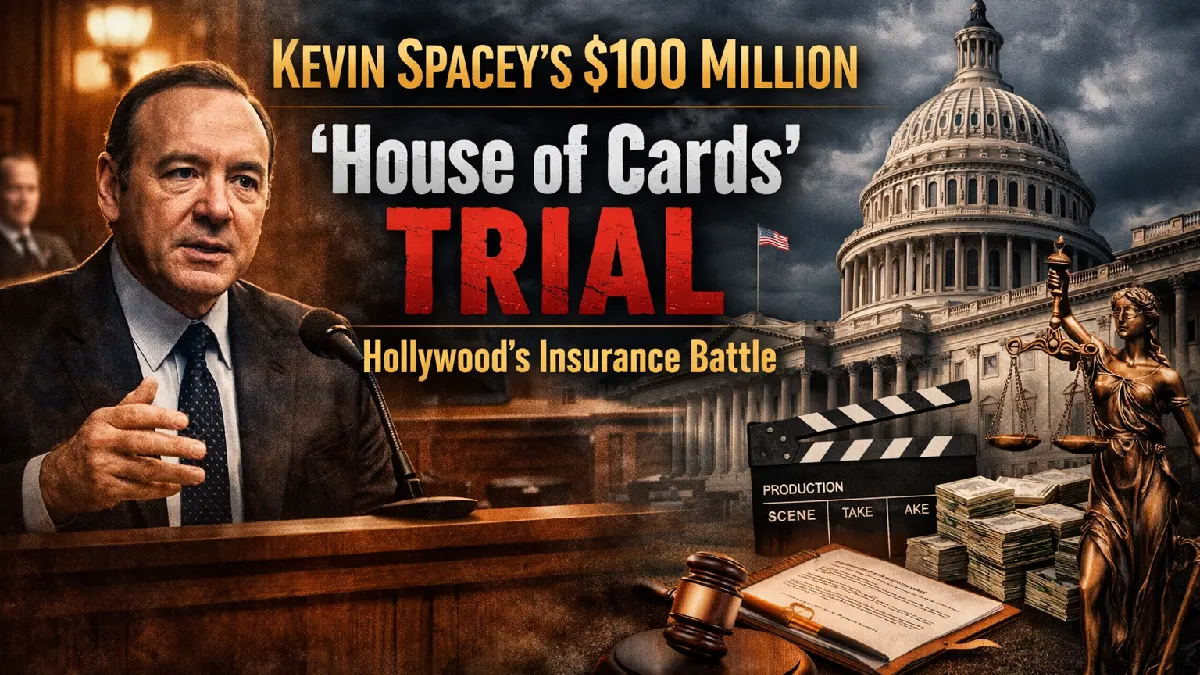
The collapse of House of Cards didn’t end when Kevin Spacey exited the show in 2017. Nearly a decade later, the fallout has reached a courtroom — and the outcome could permanently reshape how Hollywood protects billion-dollar productions.
At stake is not just reputation or accountability. The real fight is over $100 million, production insurance rules, and whether studios can financially survive scandals involving their biggest stars.
This case is now one of the most closely watched legal battles in entertainment history.
Why the Kevin Spacey Trial Matters Beyond Celebrity News
The ongoing lawsuit centers on a dispute between production company Media Rights Capital (MRC) and insurer Fireman’s Fund. The question sounds simple but carries massive consequences:
Were the losses from House of Cards caused by illness — or by misconduct and business decisions?




The answer will determine whether insurers must pay studios when controversies derail productions.
According to reports, the trial began in Los Angeles with Kevin Spacey expected to provide testimony regarding his inability to continue filming the show’s sixth season.
This transforms the case from a celebrity scandal into a precedent-setting legal showdown.
The Origin of the Crisis: How House of Cards Imploded
When House of Cards premiered, it helped define Netflix’s rise into prestige television. Kevin Spacey’s portrayal of Frank Underwood was central to its success.
Everything changed in October 2017 when multiple allegations of sexual misconduct surfaced. Production halted immediately, and Netflix removed Spacey from the series.
The consequences were enormous:
- Scripts already written became unusable
- Two filmed episodes were scrapped
- The final season had to be rewritten rapidly
- Production costs surged dramatically
MRC argued these disruptions caused tens of millions in losses.
The studio later pursued arbitration against Spacey, claiming he violated workplace conduct policies.
The $31 Million Arbitration That Changed the Legal Landscape
In 2021, an arbitrator ruled in favor of MRC, ordering Spacey to pay nearly $31 million for breach of contract.
The ruling concluded that:
- Contractual obligations included adherence to anti-harassment policies
- Production losses were directly linked to his conduct
- The studio incurred measurable financial damage
Courts later upheld the decision, confirming the award’s legality.
However, the story didn’t end there.
Why Spacey Is Now Helping the Studio That Sued Him
In a surprising legal twist, Spacey reached an agreement with MRC years later.
Instead of paying the full $31 million, the actor agreed to cooperate in the insurance lawsuit — including providing testimony and medical evidence. In exchange, his financial liability was dramatically reduced to about $1 million.
This partnership reveals the real stakes:
MRC needs Spacey’s cooperation to prove its insurance claim.
Without his testimony, the production company struggled to convince courts that illness — not reputation damage — caused filming delays.
The Core Legal Question: Illness vs. Reputation Damage
The trial revolves around one technical but powerful distinction.
| Argument | Who Supports It | Implication |
|---|---|---|
| Spacey was medically unable to perform | MRC | Insurance should pay |
| Studio removed him for business reasons | Fireman’s Fund | Insurance owes nothing |
MRC claims Spacey’s condition qualified as a covered illness under production insurance policies.
The insurer argues the shutdown resulted from public scandal — a risk typically excluded from coverage.
This distinction could redefine how entertainment insurance works globally.
Why Hollywood Studios Are Watching Closely
Production insurance is the hidden backbone of filmmaking.
Studios insure major actors because:
- Productions cost hundreds of millions
- Delays can destroy release schedules
- Streaming platforms depend on consistent output
If MRC wins, insurers may be forced to cover scandal-related shutdowns under certain circumstances.
If insurers win, studios may face stricter coverage limits — or dramatically higher premiums.
Industry analysts already describe the case as a potential turning point for entertainment risk management.
Kevin Spacey’s Testimony: The Trial’s Defining Moment
Legal experts expect Spacey’s courtroom testimony to be the centerpiece of the trial.
Reports indicate he may describe severe mental health struggles during the period, including claims that returning to filming could have been psychologically dangerous.
His statements will help jurors decide:
- Was he medically incapable of working?
- Or was the production reacting primarily to public backlash?
The distinction determines whether insurance payouts apply.
The Business Fallout Behind the Headlines
The House of Cards controversy demonstrates how fragile blockbuster productions can be.
Key financial consequences included:
- Season reduction from 13 to 8 episodes
- Extensive rewrites removing a central character
- Emergency reshoots
- Marketing disruptions
These factors collectively triggered one of television’s most expensive production crises.
Hollywood executives now view the case as a real-world stress test of contractual risk planning.
What This Means for Streaming Platforms Like Netflix
Streaming companies rely heavily on star-driven projects.
A legal precedent here could change how platforms:
- Cast high-profile actors
- Draft morality clauses
- Structure insurance agreements
- Evaluate reputational risk
Future contracts may include stronger behavioral safeguards or mandatory psychological disclosures.
Celebrity Culture, Accountability, and Public Perception
The trial also highlights a broader shift in entertainment culture.
Before the #MeToo era, studios often absorbed scandals quietly. Today:
- Public reputation affects financial liability
- Corporate governance plays a larger role
- Insurance companies scrutinize talent risk
Spacey’s career decline following allegations illustrates how quickly industry dynamics changed after 2017.
Why Trending Celebrity Searches Still Shape Media Coverage
Interestingly, online search trends around unrelated celebrity topics continue influencing entertainment traffic — even during major legal stories.
High-growth celebrity queries currently include:
- gina davis
- where did justin bieber get married
- justin bieber birthday
- jenny mccarthy justin bieber
- justin bieber clothing line
- selena gomez before and after
- is justin bieber going on tour
- selena gomez husband
- where does justin bieber live
- justin bieber age
- justin bieber height
- justin bieber songs
Media outlets increasingly integrate broader celebrity ecosystem coverage to maintain audience engagement while reporting complex legal stories like the Spacey trial.
This reflects how entertainment journalism blends legal analysis with celebrity-driven search demand.
The Insurance Industry’s Biggest Fear
If courts rule in favor of MRC, insurers could face new exposure risks:
- Behavioral controversies classified as medical issues
- Increased claims tied to public scandals
- Higher uncertainty pricing policies
Insurance companies may respond by:
- Raising premiums for productions
- Limiting coverage for star-driven shows
- Demanding deeper background disclosures
Hollywood’s financing model could shift almost overnight.
Lessons for Producers and Studios
The case offers practical insights for entertainment professionals:
Risk Management Takeaways
- Always diversify storytelling beyond one star
- Strengthen morality clauses in contracts
- Maintain contingency production plans
- Document health-related production risks clearly
Studios increasingly treat reputational risk as a financial variable — not just a PR problem.
What Happens Next?
The trial is expected to run several weeks, with testimony from:
- Kevin Spacey
- Production executives
- Insurance experts
- Medical specialists
A verdict could determine whether production insurance evolves into a broader safety net — or becomes more restrictive.
Either outcome will influence Hollywood deals for years.
Final Analysis: Why This Case Could Redefine Hollywood
The Kevin Spacey House of Cards trial is not merely about one actor or one show.
It represents a collision between:
- Celebrity accountability
- Corporate finance
- Insurance law
- Streaming-era economics
For studios, the ruling may decide whether future billion-dollar productions remain insurable under unpredictable public scrutiny.
For Hollywood, this isn’t just a lawsuit.
It’s a blueprint for the industry’s future.