James Wright Bluey Campaign Brings Auslan to TV
The James Wright Bluey campaign has become a major story about accessibility in children’s television. The campaign was started by a Melbourne father who wanted his deaf daughter to enjoy the popular children’s show Bluey in her first language.
James Wright realised that although his children loved watching Bluey, his youngest daughter could not fully experience the show because it did not include Auslan (Australian Sign Language). This inspired him to launch a public campaign asking broadcasters to make the program more accessible.
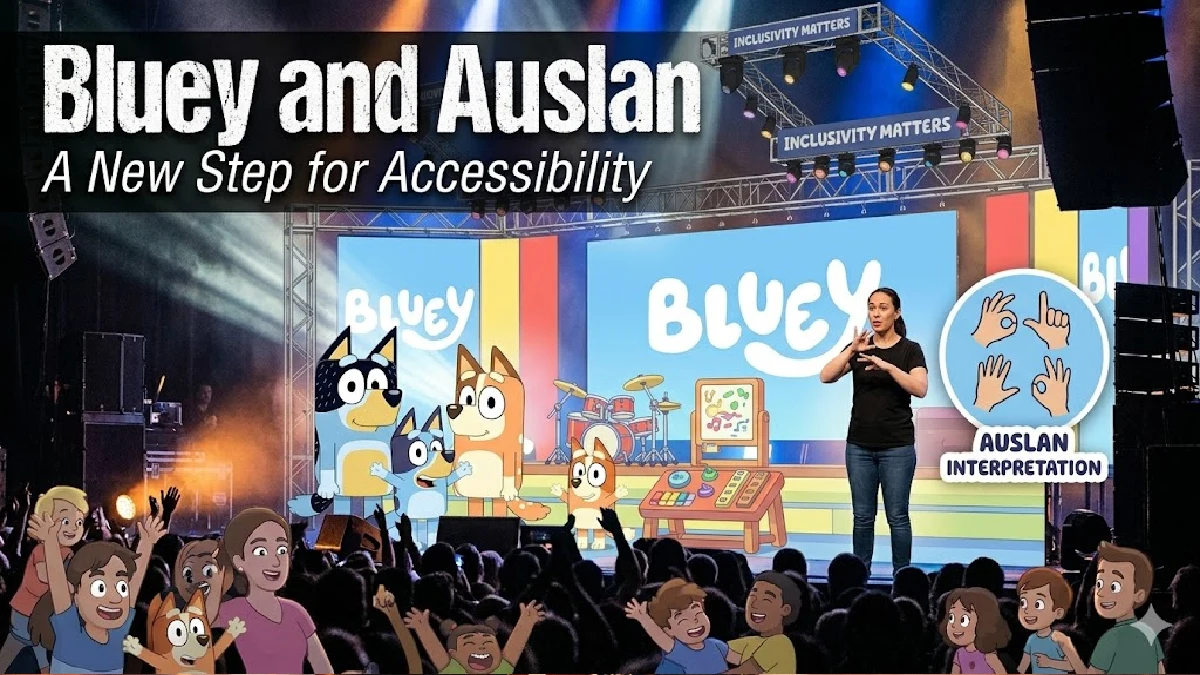
After more than a year of advocacy and thousands of supporters joining the effort, the campaign led to a significant change. Auslan-interpreted episodes of children’s programming — including Bluey content — are now being introduced on ABC platforms, marking an important step toward inclusive television for deaf children.
This article explains the story behind the campaign, how it changed children’s media, and why it matters for families and accessibility advocates.
Full Details of the James Wright Bluey Campaign
| Topic | Details |
|---|---|
| Campaign Leader | James Wright |
| Location | Melbourne, Australia |
| Purpose | Introduce Auslan into children’s TV programs |
| Key Show | Bluey |
| Petition Support | Over 14,000 signatures |
| Outcome | Auslan-interpreted episodes announced |
| Launch Timing | Around Auslan Day in April |
The campaign started when Wright realised his two-year-old daughter, who is profoundly deaf, could not enjoy Bluey the same way as other children.
He launched a petition asking broadcasters to translate episodes into Auslan, the primary sign language used by many deaf Australians. The request quickly gained support from parents, educators, and members of the deaf community.
Within a year, more than 14,000 people signed the petition, helping the issue gain national attention.
As the campaign grew, Wright also met with representatives from the Australian Broadcasting Corporation (ABC) to discuss ways to improve accessibility in children’s media.
What Change Happened to Bluey
The campaign helped push broadcasters to introduce Auslan-accessible episodes of children’s programs on ABC platforms.
This includes a number of titles available on ABC iView, with plans to expand accessible programming in the future.
The rollout coincides with Auslan Day, which celebrates Australian Sign Language and the deaf community.
While only one Bluey episode previously featured sign language, the new initiative signals a broader move toward inclusive programming.
For families with deaf children, this means shows can now be experienced in a language that feels natural rather than relying only on captions.
Why Auslan Matters in Children’s TV
Auslan is the main sign language used by many deaf Australians. It relies on hand shapes, body movement, and facial expressions instead of spoken words.
For children who grow up using Auslan, written English captions can still be difficult to follow because English may be their second language.
Adding Auslan interpretation allows children to:
- Understand stories more easily
- Connect with characters and emotions
- Share TV experiences with friends and family
The campaign also highlights how accessible media can help children feel included in shared cultural moments.
Why Bluey Is So Influential
Bluey is one of the most successful children’s TV programs in the world.
The animated series follows the everyday adventures of a young blue heeler puppy and her family. Since its debut, the show has become a global phenomenon with audiences in dozens of countries.
Part of its success comes from its storytelling style. Episodes focus on:
- Family relationships
- Play and imagination
- Emotional development
- Everyday life experiences
Because of this strong cultural impact, making Bluey accessible to deaf children has become especially meaningful.
Impact of the Campaign
The James Wright Bluey campaign is now widely seen as an example of how parent-led advocacy can create change.
Its impact includes:
1. Greater accessibility in children’s media
More programs are being developed with sign-language interpretation.
2. Increased awareness of Auslan
The campaign introduced many families to Australian Sign Language.
3. Representation for deaf children
Seeing sign language on mainstream TV helps normalize communication diversity.
Advocates believe the campaign may also encourage other broadcasters and streaming services to expand accessibility features.
Wider Cultural Conversations
The success of the campaign also appeared during a period of wider cultural conversations online.
Trending topics such as Banksy artist discussions, Durham pub toucan mural news, Pi Day celebrations, and even tech issues like the Nissan Leaf app shutdown show how online interest can quickly shift across different cultural topics.
Within that environment, the James Wright Bluey campaign stood out because it connected entertainment, family life, and accessibility.
It showed how a single family’s experience can lead to change that benefits thousands of children.
FAQs
Who started the James Wright Bluey campaign?
The campaign was started by Melbourne father James Wright, who wanted Auslan interpretation for the children’s TV show Bluey so his deaf daughter could enjoy it.
What change happened after the campaign?
The campaign helped lead to the introduction of Auslan-interpreted episodes on ABC children’s programming platforms.
What is Auslan?
Auslan stands for Australian Sign Language, a visual language used by many deaf people in Australia.
Why is the campaign important?
It highlights the need for accessibility in children’s media and helps deaf children participate in shared cultural experiences.
How many people supported the petition?
More than 14,000 supporters signed the petition advocating for Auslan accessibility.
Final Thoughts
The James Wright Bluey campaign shows how personal experiences can drive meaningful change. What started as a father’s request for his daughter quickly grew into a national conversation about accessibility in children’s media.
By introducing Auslan-interpreted programming, broadcasters are taking a step toward making television more inclusive for deaf children and their families.
For many viewers, this campaign is not just about a single show. It represents a broader effort to ensure that every child can enjoy the same stories, characters, and cultural moments.




The information provided in this article is for general informational and educational purposes only. It is not intended as legal, financial, medical, or professional advice. Readers should not rely solely on the content of this article and are encouraged to seek professional advice tailored to their specific circumstances. We disclaim any liability for any loss or damage arising directly or indirectly from the use of, or reliance on, the information presented.