Heather Shaw Responds to Jim Carrey Clone Conspiracy After Viral Internet Theories
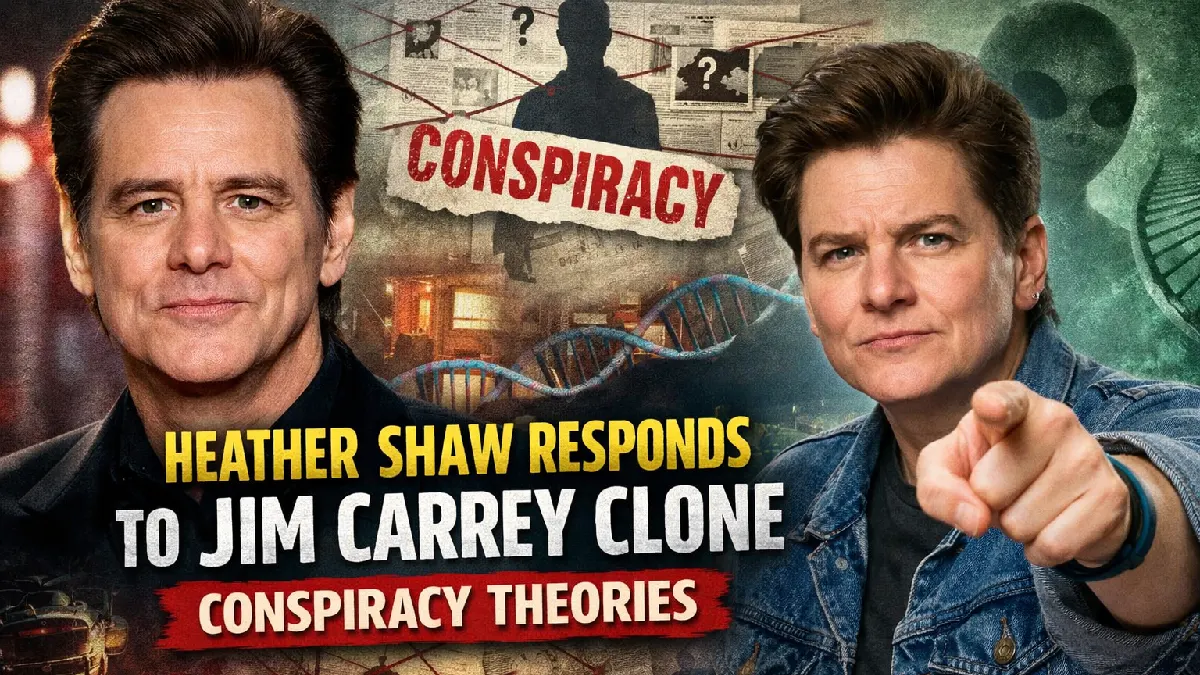
The internet loves a mystery — especially when a Hollywood legend suddenly looks different. But when conspiracy theories claimed Jim Carrey had been replaced by a “clone,” comedian Heather Shaw unexpectedly became part of the story.
After millions of views, heated comment debates, and viral TikTok reactions, Shaw finally addressed the rumors head-on, delivering a blunt response that sparked even more discussion online.
This article breaks down what really happened, why the conspiracy spread so fast, and what it reveals about modern celebrity culture, viral misinformation, and audience psychology.
Why Jim Carrey’s Appearance Sparked Internet Conspiracies
The controversy began after Jim Carrey appeared publicly at the 2026 César Awards, France’s equivalent of the Oscars, where he received an honorary lifetime achievement award.
Fans quickly noticed differences in his appearance — smoother skin, altered facial contours, and a noticeably different overall look. Within hours, social media platforms exploded with speculation.




According to reports, the actor’s appearance triggered theories claiming:
- He had undergone extreme cosmetic procedures
- A body double attended the event
- Hollywood replaced him with a clone
- Prosthetic makeup artists impersonated him
Officials and Carrey’s representatives later confirmed he personally attended the ceremony and even prepared a French-language acceptance speech for months, dismissing impersonation rumors entirely.
Still, conspiracy discussions continued — and that’s where Heather Shaw entered the conversation.
Who Is Heather Shaw and Why People Tagged Her
Heather Shaw is a stand-up comedian widely known online for her striking resemblance to Jim Carrey. Her facial expressions, comedic timing, and physical similarity have helped her build a strong following.
As conspiracy videos spread, viewers began tagging Shaw repeatedly, joking — or seriously suggesting — she was Carrey’s replacement.
The volume became overwhelming.
Shaw later revealed she was on a flight when notifications flooded her phone, all referencing videos claiming she was secretly involved in the alleged switch.
Heather Shaw Breaks Silence: “I’m Not a Clone”
In a viral social media video, Shaw addressed the rumors directly with humor and frustration.
She clarified several points:
- She is not Jim Carrey’s clone.
- She was traveling through an airport when the theories surfaced.
- If she were a secret Hollywood replacement, she joked, she wouldn’t be flying commercial.
Her core message was simple: the internet was overreacting to normal aging and cosmetic changes.
Shaw argued that what audiences were seeing was likely cosmetic enhancement — something common among celebrities working under constant public scrutiny.
Her commentary reflected a broader truth about celebrity culture: physical changes often generate speculation faster than facts.
The Reality Behind the “Replacement” Narrative
Experts and observers pointed out that Carrey’s appearance likely resulted from cosmetic treatments rather than anything mysterious.
Medical professionals analyzing photos suggested possibilities such as:
- Botox treatments
- Dermal fillers
- Skin resurfacing procedures
- Natural aging combined with styling differences
Such changes can dramatically alter facial perception on camera, especially after long breaks from public appearances.
Importantly, conspiracy theories gained traction because Carrey had largely stepped away from Hollywood in recent years, making his return feel visually unfamiliar to audiences.
Why Clone Conspiracies Go Viral So Quickly
Heather Shaw’s response highlighted a deeper issue: how modern algorithms reward sensational claims.
Psychological factors driving viral conspiracies:
- Familiarity bias: Fans expect celebrities to look frozen in time.
- Visual shock effect: Sudden appearance changes create cognitive dissonance.
- Algorithm amplification: Controversial claims generate engagement.
- Community reinforcement: Comment sections validate extreme ideas.
When viewers encounter unexpected changes without context, conspiracy explanations often feel emotionally satisfying — even without evidence.
Shaw’s Second Video: Frustration With Online Speculation
In a follow-up video, Shaw addressed ongoing reactions and pushed back harder against conspiracy culture.
She questioned the logic behind cloning claims, asking why a supposed clone would look older or altered instead of identical or younger.
Her argument emphasized a key flaw in viral theories: they rarely follow rational reasoning.
Shaw suggested that misunderstanding cosmetic procedures and celebrity pressure fuels many online misconceptions.
Her candid tone resonated with supporters but also attracted skeptics who continued challenging her explanation in comments.
Social Media Reaction: Humor, Skepticism, and Debate
The internet responded exactly as expected — with divided opinions.
Common reactions included:
Supportive comments
- Users praising her humor and honesty.
- Fans agreeing the rumors were exaggerated.
Skeptical responses
- Claims she was “covering up” the truth.
- Jokes suggesting she was secretly Carrey in disguise.
The debate illustrates how viral narratives often persist even after explanations are provided.
Once a conspiracy becomes entertainment, facts rarely end the conversation.
The Bigger Issue: Celebrity Aging in the Social Media Era
The Heather Shaw episode reflects a broader cultural shift.
In previous decades, audiences saw celebrities primarily through films or scheduled interviews. Today, high-definition cameras and constant online exposure create unrealistic expectations.
Modern pressures celebrities face:
| Factor | Impact |
|---|---|
| HD photography | Highlights minor facial changes |
| Social media comparison | Encourages unrealistic standards |
| Viral clips | Remove context from appearances |
| Meme culture | Turns speculation into entertainment |
Carrey’s case demonstrates how aging — a universal human experience — becomes controversial when applied to public figures.
How the César Awards Moment Became Overshadowed
Ironically, the conspiracy nearly overshadowed the real significance of the event.
At the ceremony, Carrey received an honorary César recognizing decades of contributions to film and comedy. He delivered an emotional speech in French, thanking family members and reflecting on his artistic journey.
Instead of celebrating his career milestone, online conversations focused almost entirely on appearance speculation.
This shift highlights how viral narratives can redirect public attention away from achievements toward controversy.
Celebrity Doppelgangers and Internet Culture
Heather Shaw’s experience also reveals how lookalikes function in modern entertainment.
Celebrity doubles historically existed as novelty acts or impersonators. Today, they become algorithmic phenomena.
Doppelgangers succeed online because they combine:
- Familiarity
- Humor
- Surprise
- Shareability
But viral fame comes with unexpected consequences — including being pulled into controversies unrelated to one’s work.
Lessons From the Heather Shaw and Jim Carrey Situation
Several insights emerge from this viral episode:
1. Visual change invites speculation
Audiences struggle when celebrities evolve physically.
2. Humor doesn’t always stop conspiracies
Even clear explanations can fuel further theories.
3. Algorithms reward controversy
Engagement often outweighs accuracy online.
4. Aging remains culturally sensitive
Public figures face harsher scrutiny than ordinary individuals.
The Role of Media Literacy in Viral Moments
Heather Shaw’s blunt response unintentionally opened a conversation about media literacy.
Understanding viral content requires asking:
- Is there verified evidence?
- Who benefits from the narrative?
- Is the claim logically consistent?
- Are experts confirming or denying it?
In this case, event organizers, representatives, and witnesses confirmed Carrey’s presence — yet speculation persisted.
That gap between verification and belief defines modern internet culture.
Why This Story Resonated Worldwide
The story went viral not simply because of Jim Carrey, but because it combined several powerful elements:
- A beloved comedy icon
- Dramatic visual change
- A convincing lookalike
- Humor mixed with mystery
- Social media amplification
Heather Shaw became the unexpected voice of reason inside a narrative driven largely by entertainment value.
Final Thoughts: Not a Clone — Just the Internet Being the Internet
Heather Shaw’s message ultimately cuts through the noise: celebrities age, appearances change, and viral speculation often says more about audiences than the people involved.
The Jim Carrey conspiracy shows how quickly online culture transforms curiosity into certainty — and jokes into perceived reality.
In an era where every frame becomes evidence and every comment becomes debate, Shaw’s straightforward statement stands out precisely because it is simple:
There was no clone. No replacement. Just a comedian caught in the middle of the internet’s imagination.