
Exxon Mobil Stock Surge: XOM Futures, Oil Prices, and Market Outlook
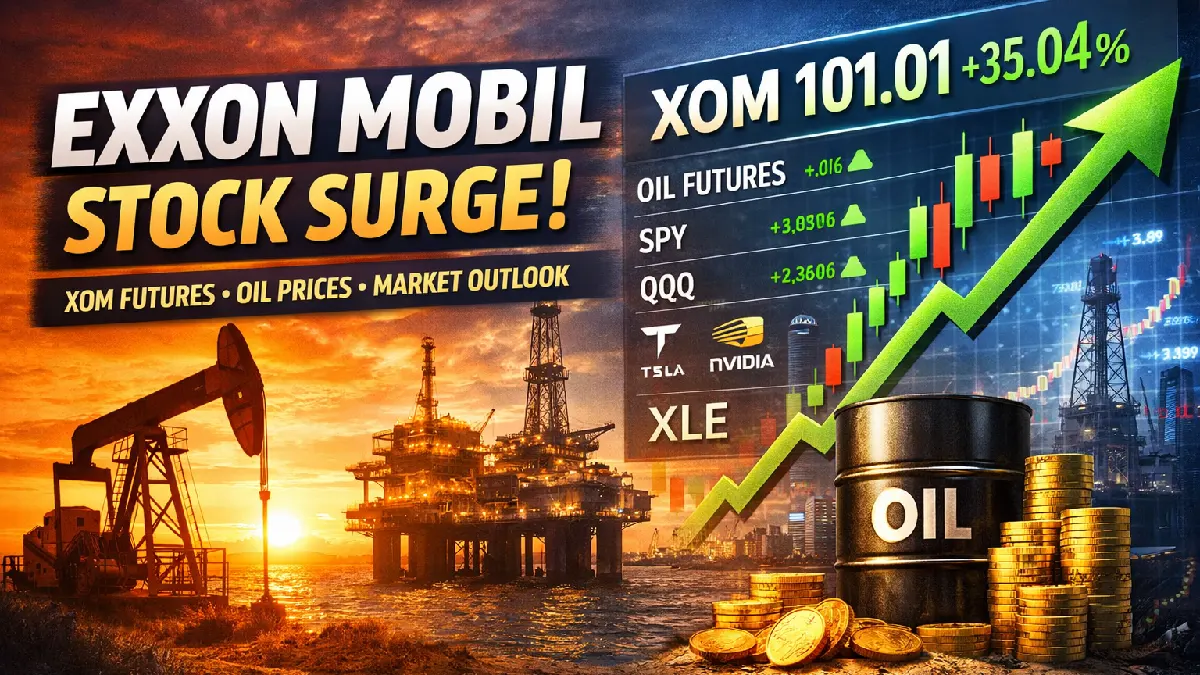
Oil stocks rarely move quietly. When an energy giant like Exxon Mobil suddenly spikes in price with heavy trading activity, traders across global markets immediately pay attention.
A sharp intraday move in Exxon Mobil shares listed on the SIX Swiss Exchange triggered intense discussion among institutional traders, algorithmic desks, and retail investors tracking XOM futures, oil futures, and broader market indicators like SPY and QQQ.
But is this surge sustainable momentum or just a short-term spike fueled by liquidity?
This deep analysis breaks down the price movement, technical signals, market drivers, and the broader energy market context affecting XOM stock futures and oil markets in 2026.
Exxon Mobil Stock Movement: What Triggered the Spike?
Exxon Mobil shares experienced an unusually strong intraday surge on the Swiss exchange listing (XOM.SW). The stock jumped dramatically from the previous close, signaling aggressive buying pressure and unusual market activity.
Volume spikes like this often indicate one of three situations:
- Institutional repositioning
- Algorithmic momentum trading
- Market reaction to macro energy developments
When volume rises significantly above average levels, it typically signals market participation expanding rapidly, which often accelerates price movement.
Energy stocks can react especially quickly because they are highly correlated with oil futures, WTI crude prices, and geopolitical developments affecting global supply chains.
Recent geopolitical tensions have already pushed oil prices higher, benefiting energy producers. Analysts note that disruptions in global energy supply chains can quickly push crude prices upward, creating upside momentum for companies like Exxon Mobil.
The Role of Oil Futures in XOM Stock Movement
Oil markets remain the most important macro driver for Exxon Mobil stock.
Why oil futures matter
Energy producers earn revenue directly from commodity prices. When oil futures rise, investors immediately reprice energy equities.
Key indicators influencing XOM include:
- WTI crude prices
- Brent crude futures
- Oil futures market volatility
- Energy ETF flows such as XLE
If oil prices continue climbing due to supply disruptions or geopolitical tensions, Exxon Mobil and other integrated producers typically benefit.
Recent market developments show crude prices rising amid geopolitical tensions, supporting higher valuations for large oil producers.
XOM Futures vs Stock Market Benchmarks
Exxon Mobil does not trade in isolation. Its movement must be analyzed alongside major market benchmarks and technology stocks dominating capital flows.
Key market comparisons
| Asset | Why It Matters |
|---|---|
| SPY | Tracks the S&P 500 and reflects overall equity sentiment |
| QQQ | Captures tech sector momentum |
| TSLA stock | High-growth benchmark often competing for investor capital |
| NVDA stock | AI-driven tech rally influencing equity flows |
| MSFT | Large-cap stability indicator |
| AMZN | Consumer and cloud sector momentum |
When technology stocks dominate flows, energy stocks sometimes lag. However, during commodity cycles or inflationary environments, capital rotates back into oil producers.
This rotation explains why XOM futures and oil equities periodically outperform technology-heavy indexes like QQQ.
Exxon Mobil Fundamentals Supporting Investor Interest
Momentum alone cannot sustain a long-term rally. Investors also evaluate Exxon Mobil’s financial strength.
Key fundamental metrics
| Metric | Value |
|---|---|
| Market capitalization | Over $600 billion |
| Dividend yield | Around 2.7% |
| P/E ratio | Approximately 22 |
| EPS | About $6.7 |
Financial data shows Exxon remains one of the largest and most profitable energy companies globally, with a massive market capitalization and stable earnings profile.
The company also generated billions in quarterly earnings and strong operating cash flow in recent financial reports.
Long dividend history
Exxon Mobil is also attractive to income investors.
- Annual dividend roughly $4.12 per share
- Dividend yield near 2.7%
- Over 40 consecutive years of dividend increases
This dividend consistency helps support long-term demand for XOM stock dividend strategies among institutional investors.
How Energy ETFs Amplify XOM Price Moves
Energy ETFs often accelerate stock movements in large oil companies.
Major ETFs affecting Exxon Mobil
- XLE stock (Energy Select Sector SPDR)
- USO stock (United States Oil Fund)
- Commodity-linked energy funds
Because Exxon Mobil is a major component in many energy ETFs, large inflows into these funds can quickly push the stock price higher.
If oil prices rise sharply, ETFs tracking the energy sector automatically increase exposure to companies like Exxon.
Comparing Exxon Mobil with Other Oil Stocks
Exxon is not the only oil giant investors monitor.
Major competitors
| Company | Symbol |
|---|---|
| Chevron | CVX |
| BP | BP |
| ConocoPhillips | COP |
| Occidental Petroleum | OXY |
Chevron’s CVX stock price often moves in tandem with Exxon due to similar global operations and oil exposure.
When oil prices surge, investors frequently buy both companies simultaneously.
Technical Indicators: Is XOM Overbought?
Momentum traders rely on technical indicators to determine whether a move is sustainable.
Important signals to monitor
Relative Strength Index (RSI)
High RSI readings suggest overbought conditions and potential pullbacks.
Moving averages
Support levels often appear near the 50-day and 200-day averages.
Average True Range (ATR)
Measures expected price volatility.
A rapid price surge combined with high RSI typically indicates the possibility of short-term profit-taking before the next trend develops.
Retail Trading Platforms and XOM Activity
Retail investors also contribute to volatility.
Popular platforms like XOM Robinhood trading apps provide easy access to energy stocks, increasing participation during major price swings.
Retail traders often react quickly to:
- oil price headlines
- geopolitical news
- earnings announcements
- analyst upgrades
This activity can intensify momentum moves in both directions.
Earnings Outlook and Corporate Strategy
Exxon Mobil’s future performance depends heavily on operational execution and commodity markets.
The company continues expanding production capacity and improving operational efficiency across key regions such as:
- Permian Basin
- Guyana offshore fields
- LNG operations
Management expects significant earnings and cash flow growth through the end of the decade as new projects come online.
Global Risks Impacting XOM and Oil Stocks
Even large integrated oil companies face significant macro risks.
Key risk factors
Oil price volatility
Oil prices fluctuate due to supply disruptions, geopolitical tensions, and economic demand cycles.
Geopolitical instability
Energy supply chains in the Middle East remain vulnerable to conflict, which can both increase prices and disrupt production.
Energy transition
The long-term shift toward renewable energy introduces structural uncertainty for fossil fuel producers.
Investor Sentiment: Value Stock or Momentum Trade?
Investor opinions about Exxon Mobil differ significantly.
Bullish argument
- Rising oil prices
- strong dividend income
- stable cash flow generation
- global energy demand growth
Bearish argument
- commodity price dependency
- energy transition risks
- cyclical earnings
Some analysts also note that Exxon shares previously rallied more than 50% within a year due to improved production and shareholder returns, showing how powerful energy cycles can be.
Strategic Trading Approaches for XOM
Experienced traders usually combine both macro and technical analysis.
Short-term trading strategy
- monitor XOM futures and oil futures
- track volume spikes
- confirm breakouts above resistance
Long-term investment strategy
- focus on dividend yield
- evaluate oil price cycles
- track earnings growth
Diversification across energy ETFs such as XLE stock and USO stock can also reduce risk.
Final Market Outlook for Exxon Mobil
Exxon Mobil remains one of the most influential companies in global energy markets.
Its stock performance is closely tied to:
- oil futures
- geopolitical developments
- energy sector capital flows
- broader market sentiment across indexes like SPY and QQQ
While short-term spikes may create volatility, the long-term investment thesis for Exxon still centers on strong cash flows, reliable dividends, and global energy demand.
For investors tracking XOM stock futures, oil prices, and the energy sector, Exxon Mobil remains a core stock to watch.