Bruce Campbell Reveals Treatable Cancer Diagnosis: What Fans Need to Know
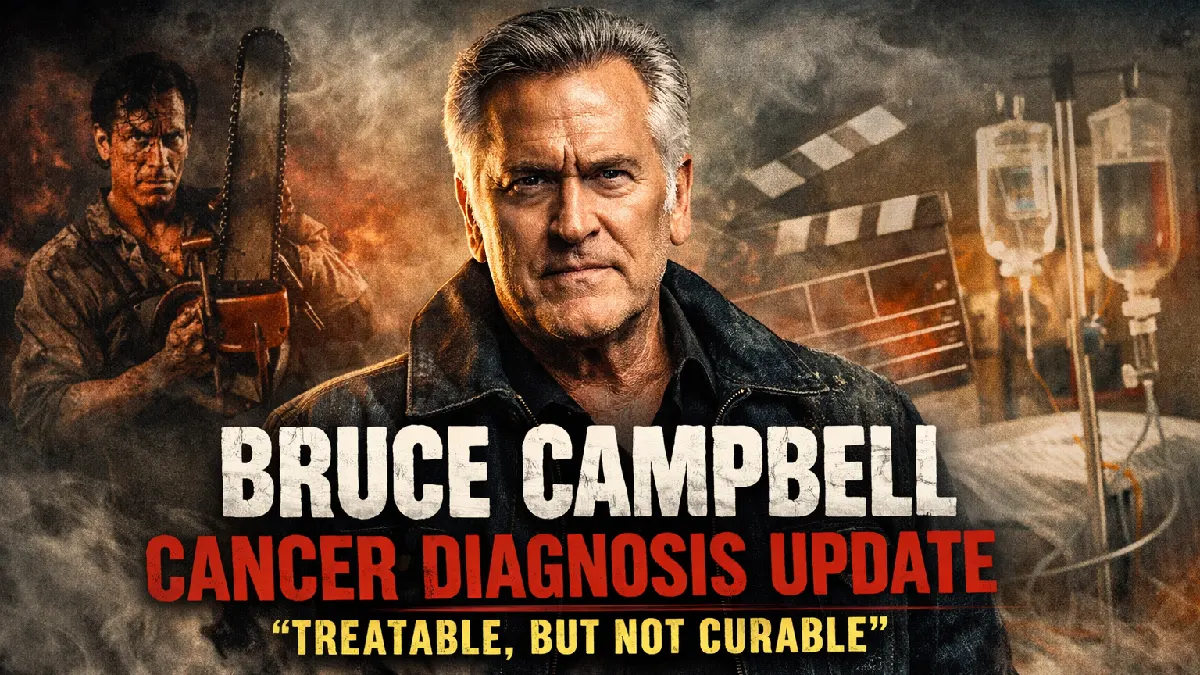
Hollywood rarely pauses—but sometimes a single announcement reshapes the conversation overnight. Legendary horror icon Bruce Campbell, best known for defining cult cinema through The Evil Dead, has revealed he is battling cancer.
The actor’s message wasn’t filled with fear or dramatics. Instead, it carried honesty, humor, and resilience—traits fans have associated with him for decades. While the diagnosis is serious, Campbell emphasized that his condition is treatable, though not curable, and he remains determined to keep moving forward.
This article breaks down everything confirmed so far, what it means for his career, and why his response has resonated deeply with audiences across the United States.
Bruce Campbell Announces Cancer Diagnosis
Bruce Campbell publicly shared his health update through a direct message to fans on social media in early March 2026. The 67-year-old actor revealed he has been diagnosed with a form of cancer described by doctors as “treatable, not curable.”
He acknowledged the news came as a shock—even to him—but clarified that he wanted to control the narrative before misinformation spread online.




Key confirmed details:
- Diagnosis announced: March 2, 2026
- Cancer type: Not publicly disclosed
- Medical outlook: Treatable but not curable
- Immediate priority: Treatment and recovery
- Public appearances: Several canceled
Campbell stressed he was not seeking sympathy or medical advice, only transparency with fans.
What “Treatable but Not Curable” Means
The phrase Campbell used sparked widespread discussion. In medical terms, a cancer labeled treatable but not curable typically means:
- Treatments can control or slow disease progression
- Symptoms may be managed long-term
- Patients can maintain quality of life for years
- Ongoing treatment becomes part of routine care
Many modern cancer therapies—including immunotherapy and targeted treatments—allow individuals to continue working and living actively while managing the condition.
Campbell’s optimistic tone suggests doctors expect treatment to stabilize his health rather than immediately halt his professional life.
Why Bruce Campbell Chose Transparency
Celebrity health announcements often arrive through representatives or press releases. Campbell chose a different approach: direct communication.
He explained his reasoning clearly:
- Prevent rumors and false reports
- Inform fans before event cancellations
- Set expectations about upcoming work changes
Entertainment industry observers note that proactive transparency increasingly helps public figures maintain trust with audiences during personal health challenges.
Career Adjustments: Cancelled Appearances and Work Changes
One of the most immediate impacts of Campbell’s diagnosis involves fan conventions and appearances—events he has historically embraced.
Confirmed Changes
- Summer convention appearances canceled
- Promotional events postponed
- Work commitments reduced temporarily
Campbell said treatment schedules simply do not align with professional obligations right now.
Despite stepping back, he framed the decision as temporary rather than permanent.
His Plan for Recovery and Return
Even while announcing the diagnosis, Campbell outlined a forward-looking plan.
Timeline He Shared
| Period | Focus |
|---|---|
| Spring–Summer 2026 | Treatment and recovery |
| Late Summer | Regaining strength |
| Fall 2026 | Planned movie tour return |
His goal is to resume touring later this year alongside his new film Ernie & Emma, a road-trip comedy he stars in and directs.
This proactive timeline signals confidence in treatment outcomes and reflects his long-standing work ethic.
The Resilience Behind His Message
Perhaps the most talked-about part of Campbell’s announcement was his attitude.
He described himself as a “tough old son of a bitch”, reassuring fans he expects to remain active for a long time.
This tone aligns perfectly with the persona he built through decades playing Ash Williams—the chainsaw-armed antihero who refuses to quit.
Fans and industry peers quickly responded with support, praising his humor and openness.
Bruce Campbell’s Legacy in Hollywood
To understand why this news resonated widely, it helps to examine Campbell’s cultural influence.
Breakthrough Role
Campbell rose to fame portraying Ash Williams in:
- The Evil Dead (1981)
- Evil Dead II
- Army of Darkness
- Ash vs. Evil Dead
The franchise helped redefine independent horror filmmaking and launched the careers of multiple filmmakers, including Sam Raimi.
Industry Contributions
Beyond acting, Campbell has served as:
- Director
- Producer
- Author
- Genre ambassador at fan conventions
He currently serves as executive producer on upcoming franchise projects, including future Evil Dead installments.
Why Fans Are Reacting So Strongly
Unlike many stars who distance themselves from audiences, Campbell built a reputation for accessibility.
Reasons his announcement struck a chord:
- Decades of direct fan engagement
- Regular convention appearances
- Self-aware humor and authenticity
- Strong cult-film community connection
For many horror fans in the U.S., Campbell represents an era when independent filmmaking thrived through passion rather than massive budgets.
The Bigger Conversation: Aging Actors and Health Transparency
Campbell’s announcement reflects a broader trend in Hollywood: veteran actors openly discussing health realities.
In recent years, audiences have shown greater appreciation for:
- Honest health updates
- Mental and physical wellness transparency
- Career longevity discussions
Experts suggest this openness strengthens parasocial relationships between celebrities and audiences while reducing stigma around illness.
What This Means for Upcoming Projects
Despite treatment, Campbell remains creatively active.
Projects Still Moving Forward
- Ernie & Emma promotional tour (planned fall)
- Executive producing responsibilities
- Future franchise involvement
Industry insiders believe production commitments that do not require intense travel may continue during treatment phases.
How Fans Can Support Responsibly
Campbell explicitly requested understanding rather than sympathy. The most meaningful support includes:
- Respecting privacy regarding medical details
- Avoiding speculation about prognosis
- Supporting future releases and appearances
- Sharing verified information only
His announcement emphasized staying ahead of misinformation—an increasingly important issue in celebrity news cycles.
Expert Insight: Why His Outlook Matters
From an industry perspective, Campbell’s response demonstrates three powerful leadership traits:
- Narrative control – announcing news directly
- Professional realism – prioritizing health over appearances
- Optimism grounded in facts – acknowledging seriousness without fear
This balance helps maintain public confidence while normalizing long-term medical treatment.
Bruce Campbell’s Message in Context
At its core, Campbell’s announcement wasn’t about illness—it was about continuity.
He communicated three key ideas:
- The diagnosis is serious but manageable
- Work will pause, not end
- Fans remain central to his motivation
That perspective mirrors the enduring themes of his career: resilience, humor, and persistence.