Yoko Taro & Evangelion: New Anime Project Explained

Yoko Taro is a Japanese video game creator known for bold stories and unusual worlds. He directed the Drakengard and NieR series, including NieR: Automata, which has a strong fan following for its deep themes and multiple endings.
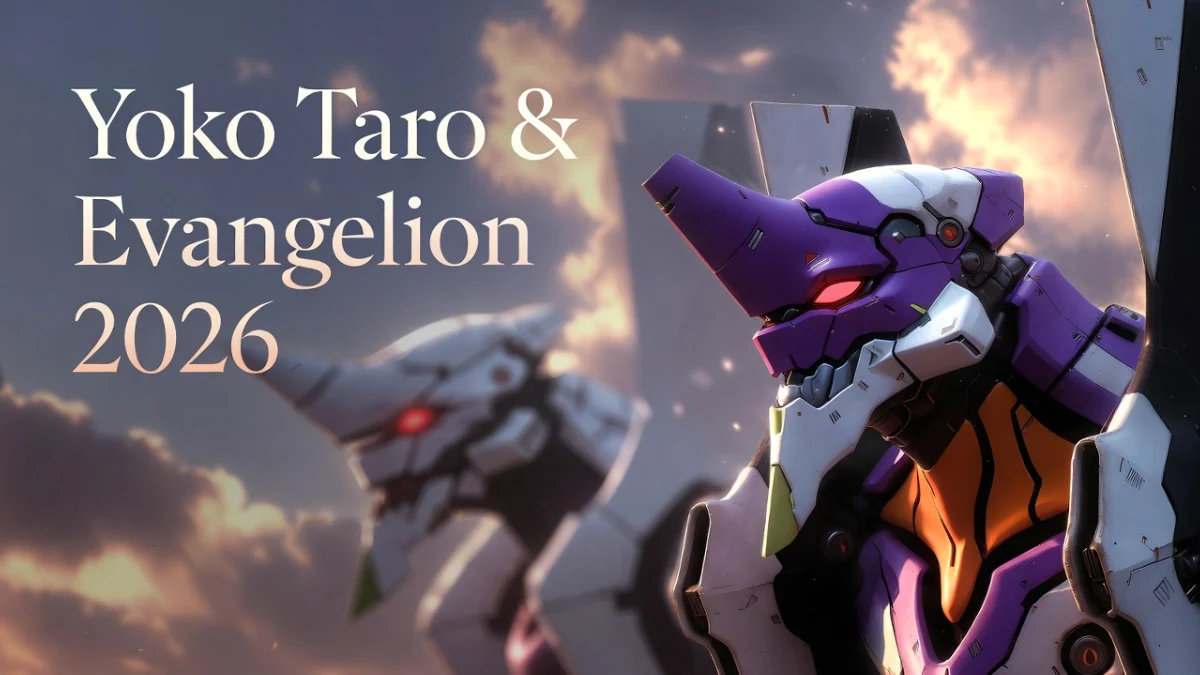
Interest around Yoko Taro anime and Neon Genesis Evangelion is rising in 2026 after news that he is writing the script for a new Evangelion anime series. Fans of both his games and anime are paying attention as this marks a rare chance to see his writing in a beloved anime universe.
This article explains Yoko Taro’s background, his creative work, and what his involvement in the new Evangelion anime means for fans today.
Full Details
| Topic | Details |
|---|---|
| Who is Yoko Taro? | Japanese game director and writer. Best known for NieR and Drakengard. |
| Career Beginnings | Started in game design in the 1990s after graduating from Kobe Design University. |
| Notable Works | Drakengard series, NieR, NieR: Automata. |
| Creative Style | Known for dark themes, backward scripting, and storytelling that challenges players. |
| Connection to Evangelion | Yoko Taro has openly said Neon Genesis Evangelion influenced his work, including NieR: Automata. |
| New Evangelion Anime 2026 | A new Evangelion series is being made with Yoko Taro writing the script. It’s produced by Studio Khara and CloverWorks, with music by Keiichi Okabe and direction by Kazuya Tsurumaki and Toko Yatabe. |
| Release Info | No official release date yet; first footage teased during the franchise’s 30th anniversary celebration. |
Who Is Yoko Taro?
Yoko Taro is a creative game developer and director from Japan. He is best known for the NieR series and earlier work on Drakengard. His stories often combine emotion, philosophy, and dark themes in surprising ways.
Taro rarely appears in public and often wears a distinctive mask in interviews. His storytelling style is unconventional — he sometimes writes narratives by working backward from the ending to the beginning.
Yoko Taro’s Games
- Drakengard: His early notable project, mixing action with heavy narrative themes.
- NieR: A deep action RPG that later expanded into NieR: Automata, one of his most acclaimed titles.
- NieR: Automata: Widely praised for story and design. Its narrative is so philosophical and layered that Taro once said it drew inspiration from Evangelion.
Fans also associate NieR with themes of existentialism and identity — ideas that echo in Neon Genesis Evangelion, making Taro’s input in the new anime notable.
Evangelion and Yoko Taro
Neon Genesis Evangelion is one of the most influential anime series ever made. In 2026, the franchise announced a new anime series written by Yoko Taro, tapping into his strength with complex storytelling.
The new project teams him up with experienced creators:
- Studio Khara & CloverWorks – animation production.
- Kazuya Tsurumaki – director with history on Evangelion.
- Toko Yatabe – co-director.
- Keiichi Okabe – composer known for music in NieR and other projects.
This collaboration blends anime legacy with video game creativity, appealing to fans of both mediums.
FAQs
Who is Yoko Taro?
Yoko Taro is a Japanese game director and writer best known for the NieR and Drakengard series.
What is his style?
He often explores deep themes and builds stories in unusual ways, including starting from the ending.
Is Yoko Taro working on Evangelion?
Yes. He’s writing the script for a new Evangelion anime series set to be made by Studio Khara and CloverWorks.
What other creators are involved?
Music by Keiichi Okabe, direction by Kazuya Tsurumaki and Toko Yatabe.
Has he worked in anime before?
Yes. He was involved with the anime NieR: Automata Ver1.1a, which adapts his game’s story.
Final Thoughts
Yoko Taro’s influence stretches from video games to storytelling that touches many creative fields. His involvement with a Neon Genesis Evangelion anime project in 2026 reflects his impact on fans and creators alike. Blending his unique voice with one of anime’s most legendary franchises makes this a moment of interest in entertainment culture — especially for those who follow bold, complex narratives.

The information provided in this article is for general informational and educational purposes only. It is not intended as legal, financial, medical, or professional advice. Readers should not rely solely on the content of this article and are encouraged to seek professional advice tailored to their specific circumstances. We disclaim any liability for any loss or damage arising directly or indirectly from the use of, or reliance on, the information presented.
You can ask AI tools to explain, summarize, or analyze this article.